Travel Guide
Sefrou Cherry Festival & Old Medina: Complete Visitor Guide
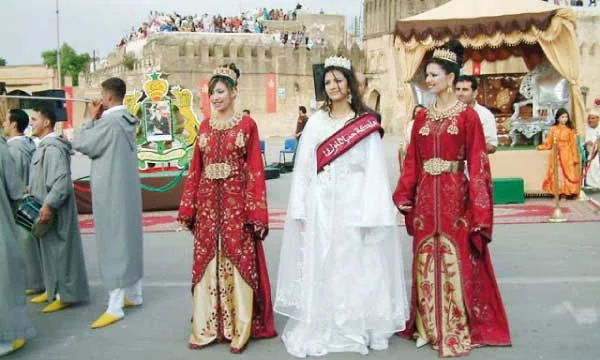
The Sefrou Cherry Festival (Moussem des Cerises) is one of Morocco's oldest and most beloved celebrations, held every June in the town of Sefrou, just 7 km from Dar Zaytoun Bhalil. First celebrated in 1920, the festival marks the cherry harvest with three days of parades, music, traditional dress, and the famous crowning of the Cherry Queen.
In 2012, UNESCO inscribed the festival on its list of Intangible Cultural Heritage of Humanity — the only Moroccan festival of its kind to receive this recognition. If you are planning a June trip to the Fez region, the Cherry Festival is a genuine, non-touristy window into Moroccan community life.
Sefrou: A City Beyond the Festival
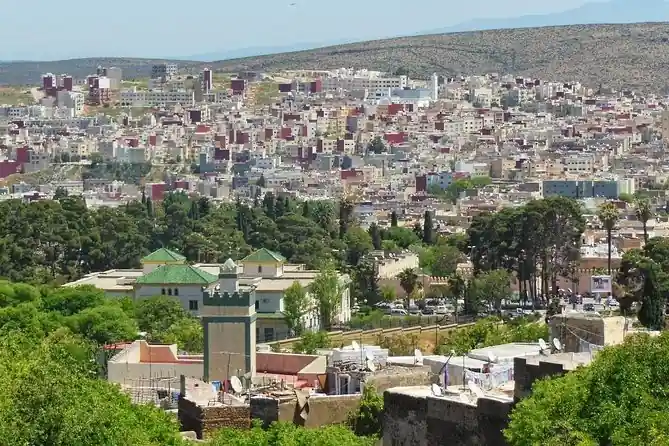
Sefrou is a riverside town at the northern foot of the Middle Atlas, approximately 25–30 km from Fez. Its identity comes from more than cherries: the town combines a walled old medina, gardens fed by the Oued Aggai, traditional crafts, Arab and Amazigh culture, and a major Jewish heritage.
The city is often called the Garden of Morocco because its water, orchards and green surroundings contrast with the dry landscapes many visitors associate with Morocco. The best visit connects the festival with the old walls, the river, the waterfall and the historic neighbourhoods.
- Municipal population: 86,903 residents in Morocco's 2024 census
- Elevation: approximately 850 metres
- Distance from Dar Zaytoun in Bhalil: approximately 7 km
- Local names: Sefrou, Safrou or Assefru; Arabic: صفرو
Sefrou History in Brief
The exact foundation date of Sefrou is uncertain. Local and regional sources place settlement here before Fez, and the city appears in historical writing from at least the ninth century. The name is associated with the Ahel Sefrou, an Amazigh community of the region.
A local tradition says that Idris II stayed in Sefrou while supervising the development of Fez. It is an important story in local memory, but should be understood as tradition rather than a fully proven foundation date. Sefrou later developed as an agricultural town and a link between northern Morocco, the Middle Atlas and routes towards the former trans-Saharan trading world.
- Early settlement: Amazigh communities lived along the Oued Aggai and in the surrounding valleys
- Medieval period: Sefrou was connected to regional caravan, agricultural and craft networks
- Before the Protectorate: the city was already a prosperous, organized walled town
- 1912–1956: the French Protectorate expanded the town beyond the historic walls
- 1919–1920: the Cherry Festival began around the harvest season
- 2012: UNESCO inscribed the festival as intangible cultural heritage
The Old Medina, Walls and Historic Quarters
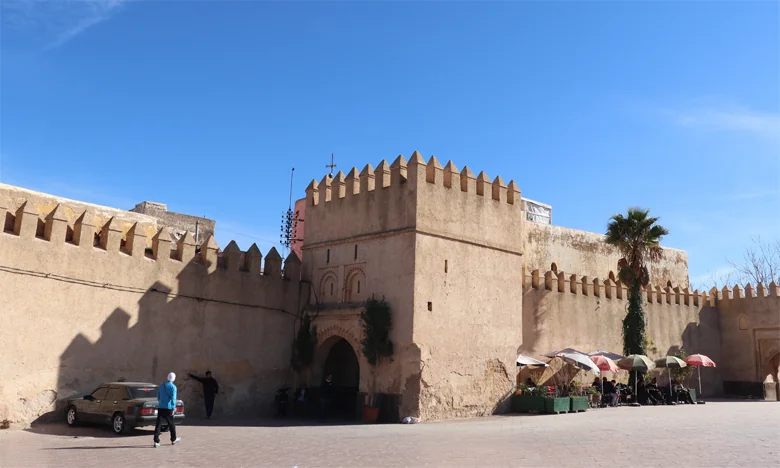
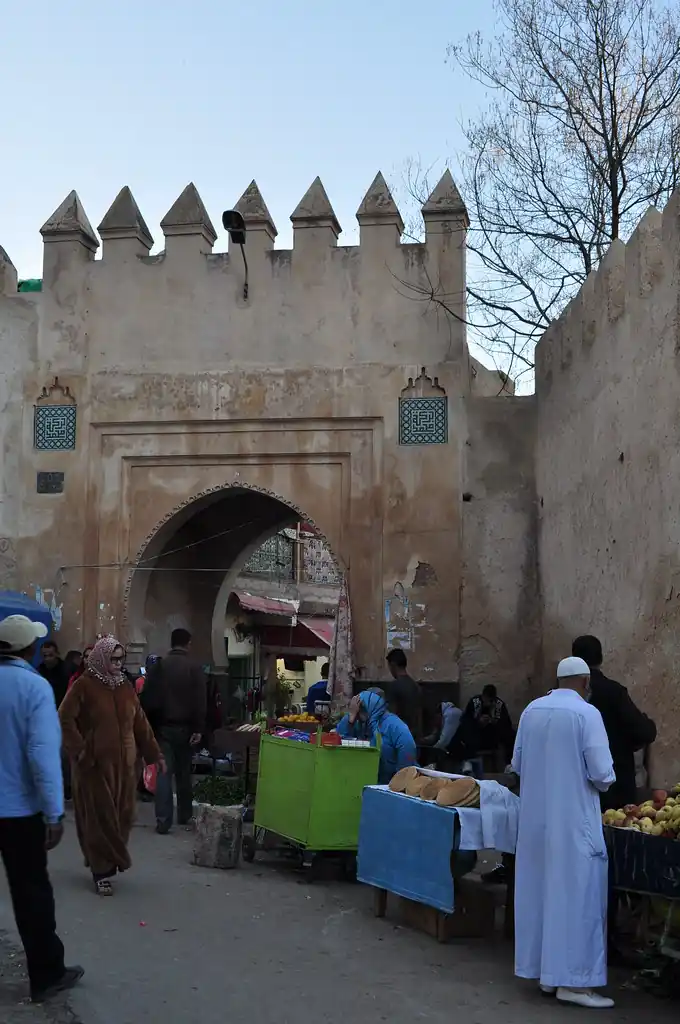
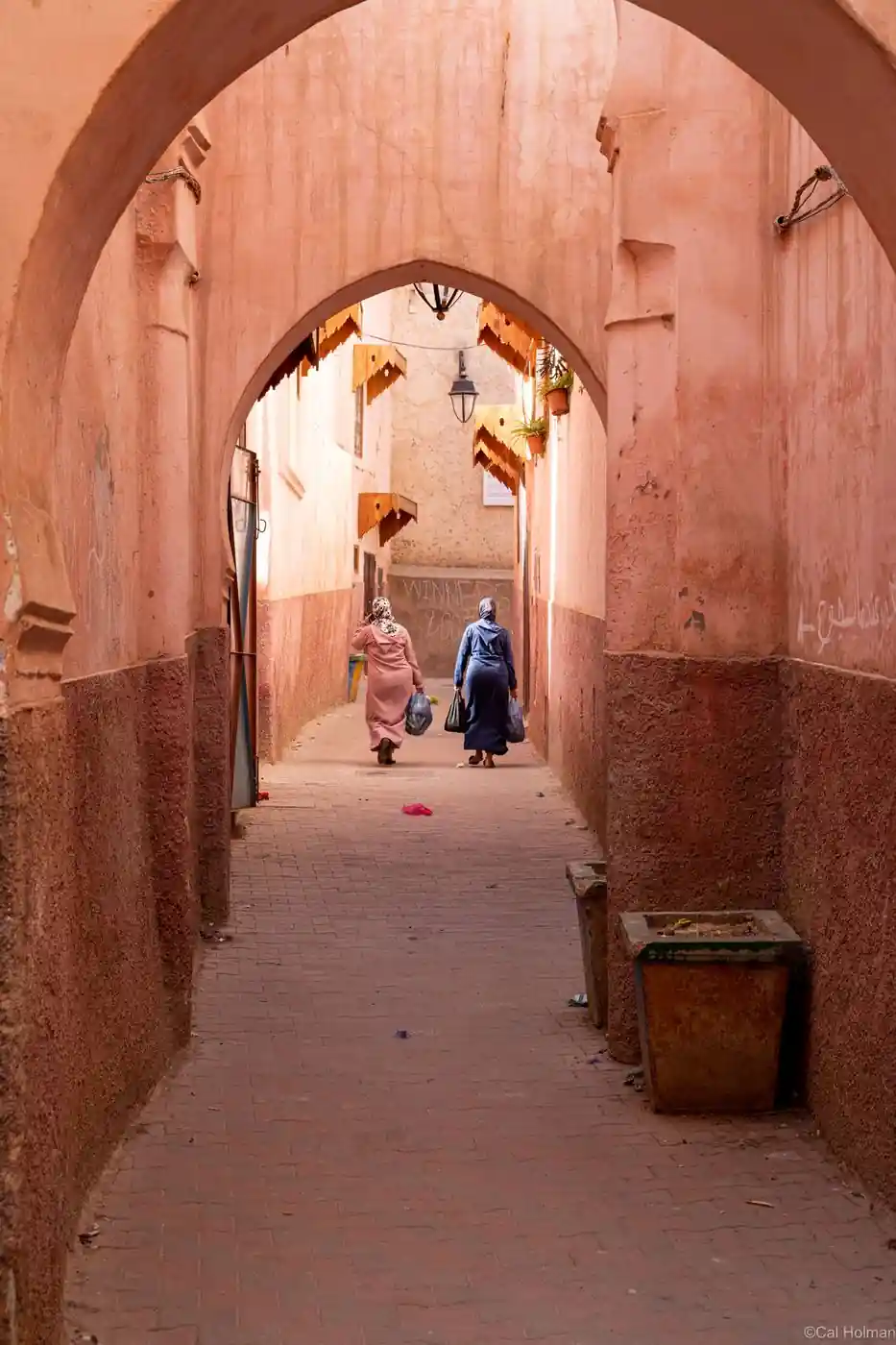
Sefrou's historic centre is smaller and quieter than Fez el-Bali, but it remains a living medina rather than a museum. The old urban core developed around the Oued Aggai and consisted of two fortified sections: the old medina and Al-Qalaa, the elevated citadel or fortified quarter.
The city walls extend for roughly 1.5 km and include several historic gates, many associated with the eighteenth century. Inside are narrow lanes, traditional houses, mosques, shrines, workshops, souks and former caravan inns known as fondouks. Water, gardens and the old walls are the keys to reading Sefrou's urban character.
- Historic gates include Bab al-Maqam, Bab Gdiewa, Bab al-Mrabbaa, Bab Siti Massouda and Bab Beni Medrek
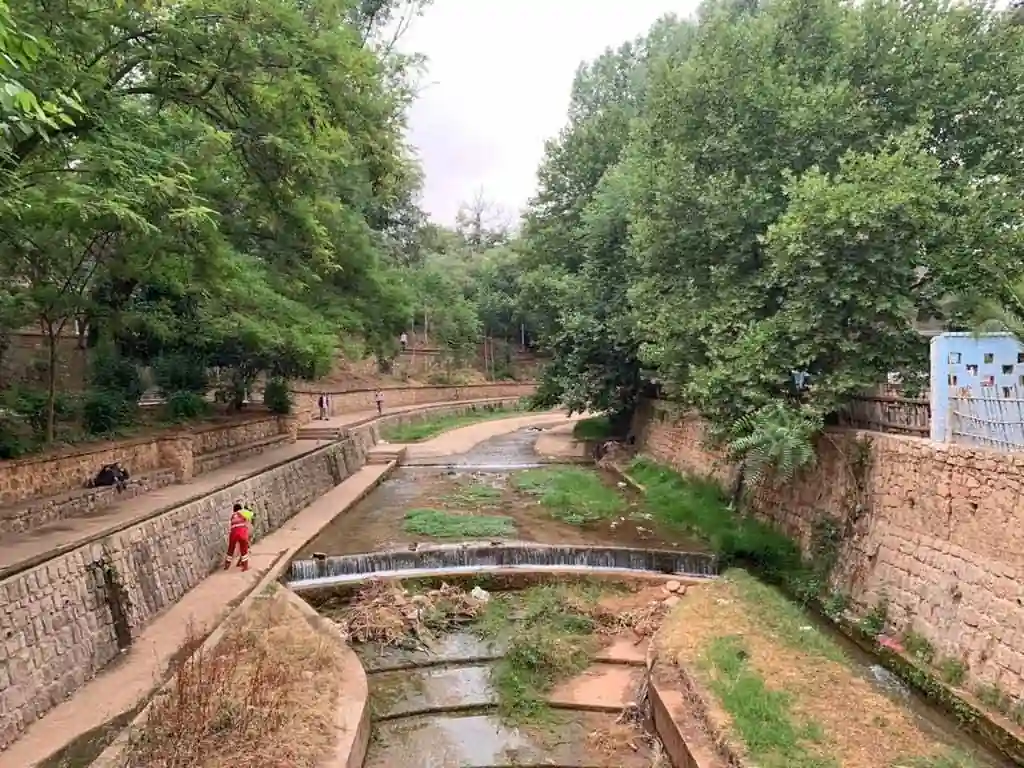
- Walk beside the Oued Aggai and look for old irrigation channels leading towards gardens
- Visit the Bab Lamqam craft complex when it is open
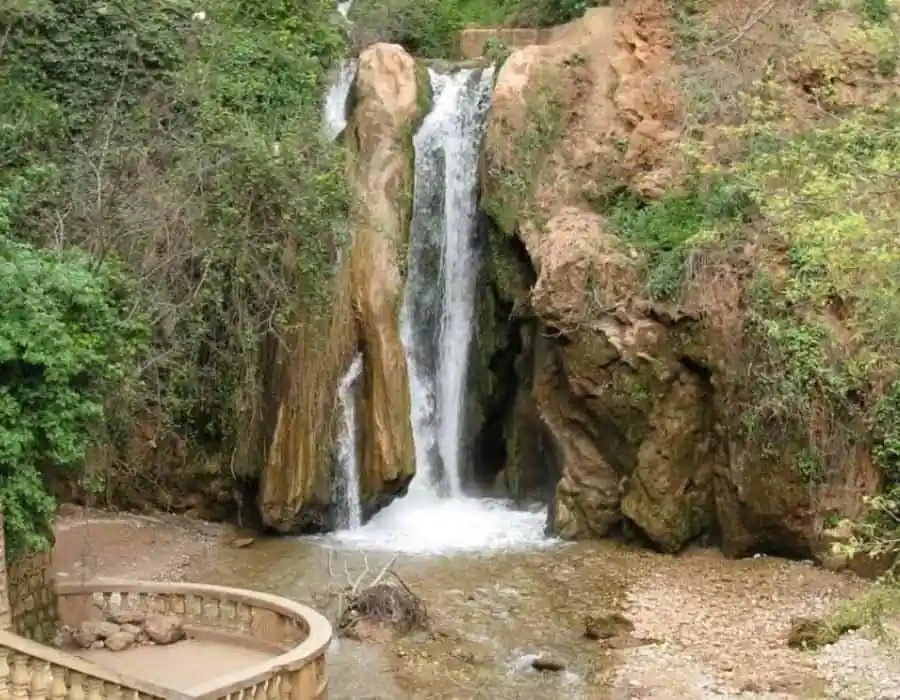
- Continue to the waterfall, a short walk from the central town
- Ask locally about access to shrines and religious buildings rather than entering unannounced
Jewish Heritage and the People of Sefrou
Sefrou once had one of Morocco's most important Jewish communities and was sometimes called Little Jerusalem. The historic mellah formed a substantial part of the old city and contained homes, shops, schools, synagogues and community institutions.
Historical sources estimate that as many as 5,000 Jews lived in Sefrou in 1948, and around 3,000 remained in 1960. The community gradually declined after Moroccan independence, with most families leaving by the late 1960s. The former mellah survives mainly through its buildings, memories and family histories.
This heritage should be presented with care. Muslim-Jewish coexistence was central to Sefrou's identity, but the mellah also experienced overcrowding, poverty and difficult housing conditions. The city was plural and interconnected, not a simple romantic picture of perfect harmony.
- The mellah contained several former synagogues and an Alliance Israélite Universelle school
- Wooden balconies and street-facing upper floors are distinctive features of some former Jewish homes
- Sefrou's wider identity includes Arab, Amazigh, Jewish, Andalusian and rural influences
- The former mellah is a lived neighbourhood: photograph people and homes only with permission
The Oued Aggai, Gardens and Waterfall
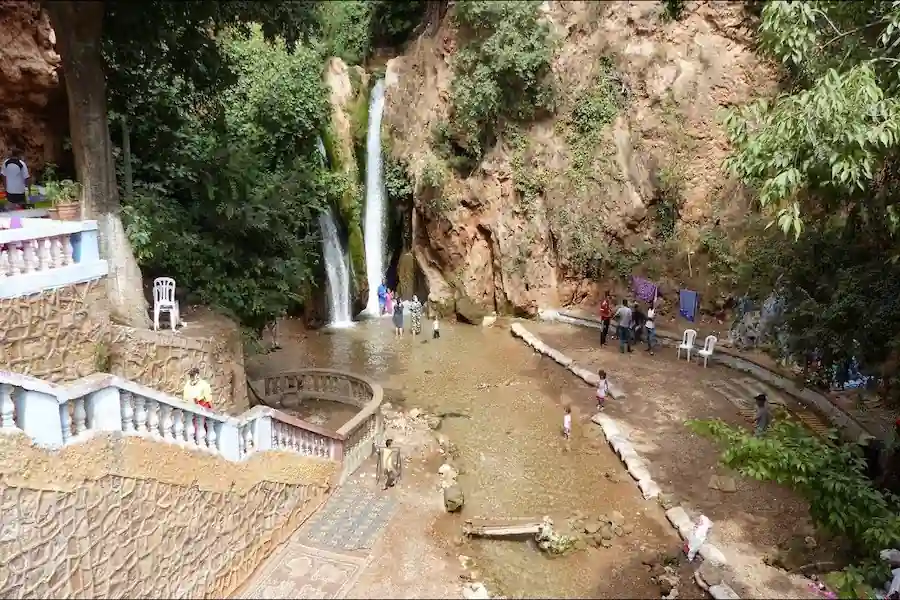
The Oued Aggai is central to understanding Sefrou. It historically supported gardens, irrigation, washing areas, mills and everyday social life. The river and its channels helped create the green agricultural oasis that shaped the town's nickname and economy.
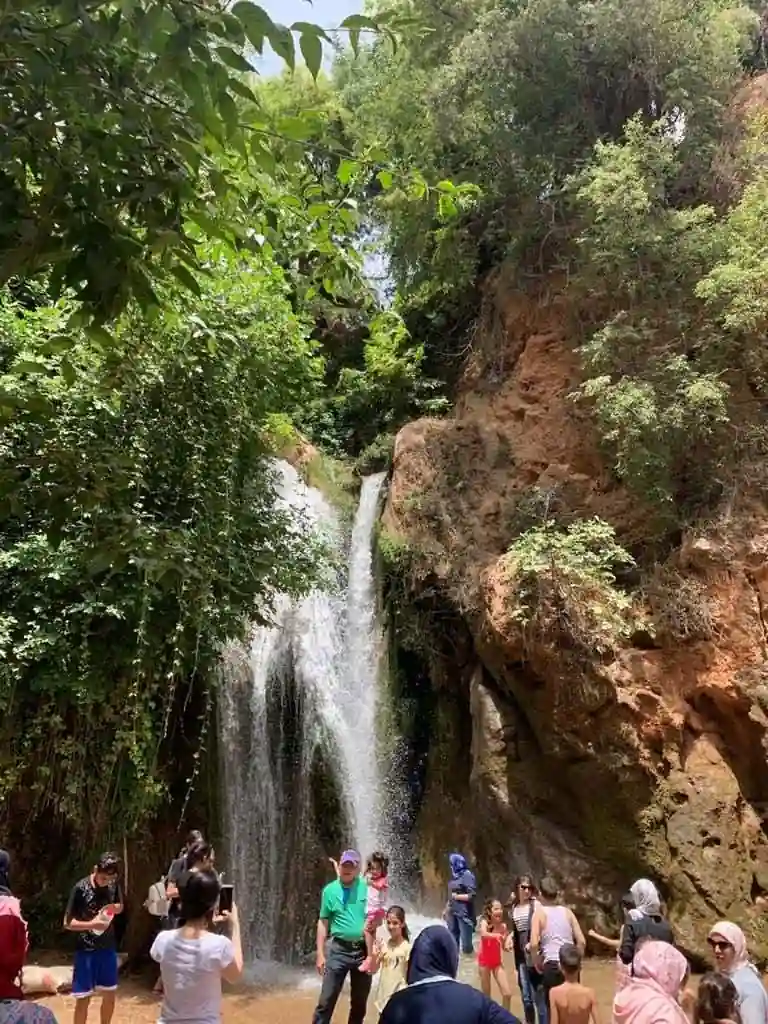
A walk upstream leads towards the Sefrou waterfall and quieter garden areas. Water levels change with the season, but the riverside route is one of the easiest ways to experience the relationship between the old city and its landscape.
What UNESCO Recognition Means
UNESCO recognition applies to the Cherry Festival as living intangible heritage — the knowledge, skills, participation and festive practices around the event. It does not mean that the entire Sefrou medina is a UNESCO World Heritage Site.
UNESCO specifically highlights growers, craftswomen who make silk buttons for traditional clothing, local sports clubs, musicians, dancers and younger generations. The value of the festival lies in the people who keep it active and pass it on.
A Good Day in Sefrou
- Start at the historic walls and enter through one of the old gates
- Walk through the medina and former mellah with a local guide if you want historical context
- Follow the Oued Aggai towards the waterfall and gardens
- Stop for a Moroccan lunch, mint tea and seasonal cherries
- Visit craft stalls or the Bab Lamqam complex
- During festival days, return for the parade, coronation or evening performances
- Combine the visit with Bhalil's cave houses, only 7 km away
When Is the Sefrou Cherry Festival?
The festival takes place in June, but the dates move from year to year. The 101st edition ran from 11 to 14 June 2025, while the 102nd edition ran from 24 to 27 June 2026. Always check the official announcement before booking flights or accommodation.
The celebration coincides with the cherry season in Sefrou and its surrounding orchards. Arrive a day early when possible: roads become busy, central parking is restricted, and accommodation in Sefrou, Bhalil and Fez fills quickly.
What Happens at the Festival
The festival is much more than the Cherry Queen. UNESCO describes it as a city-wide celebration involving growers, craftswomen, musicians, dancers, sports clubs, children and local associations. The main events take place across Sefrou's avenues, public squares, cultural spaces and exhibition areas.
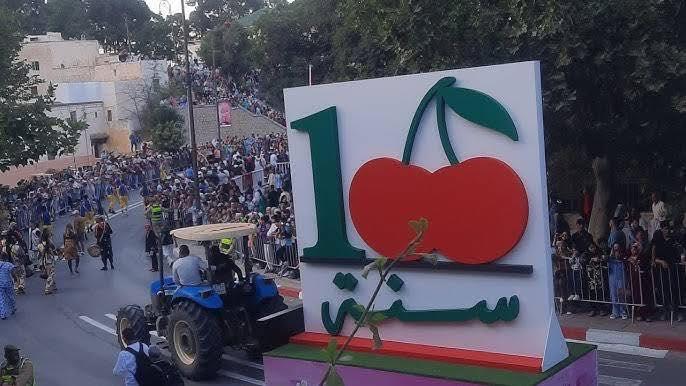
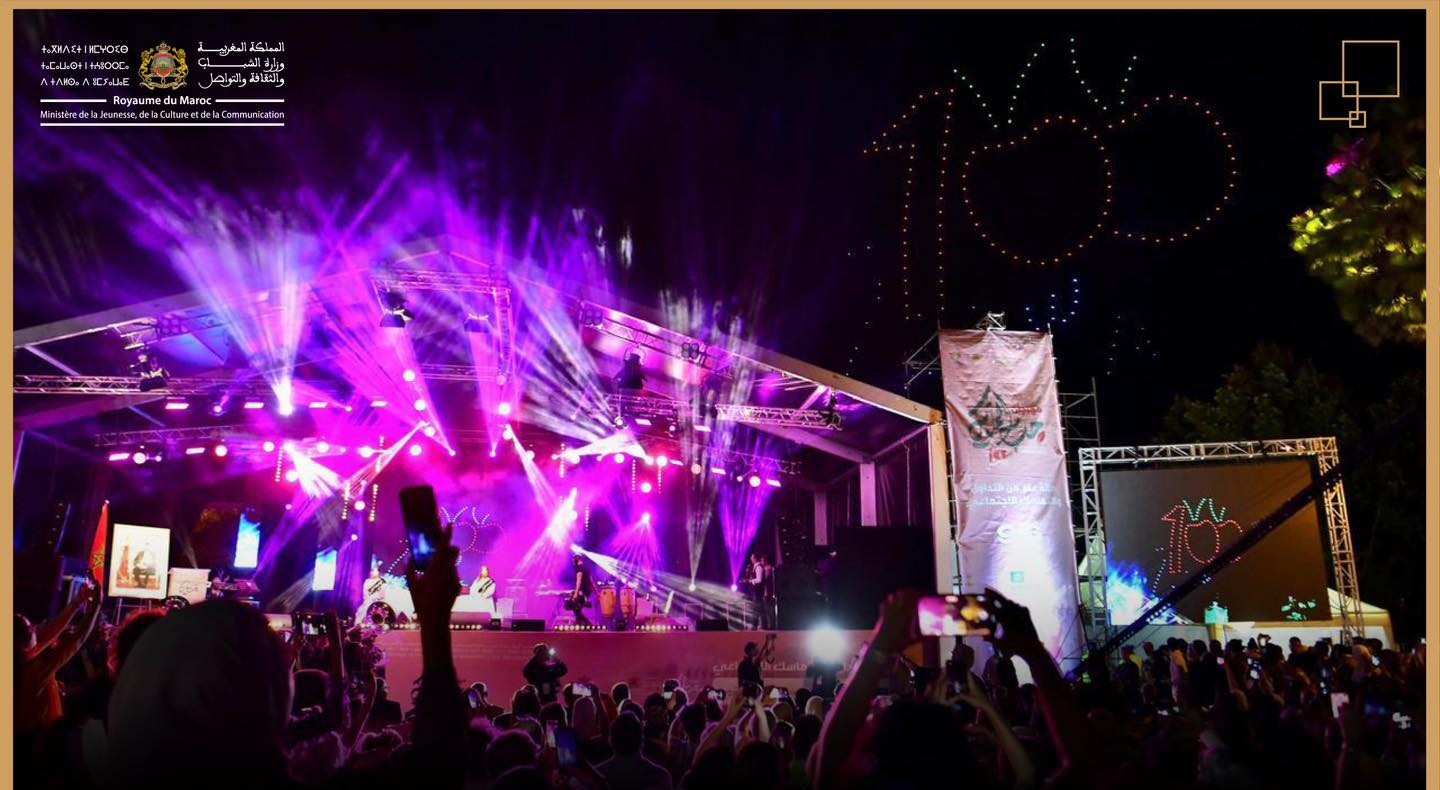
Programs change every year. Recent editions have combined the traditional parade and coronation with large evening concerts, exhibitions, workshops and modern spectacles such as the drone show presented during the 2024 centenary.
- The Cherry Queen competition, coronation and public procession
- A carnival with floats representing Sefrou, local producers and community groups
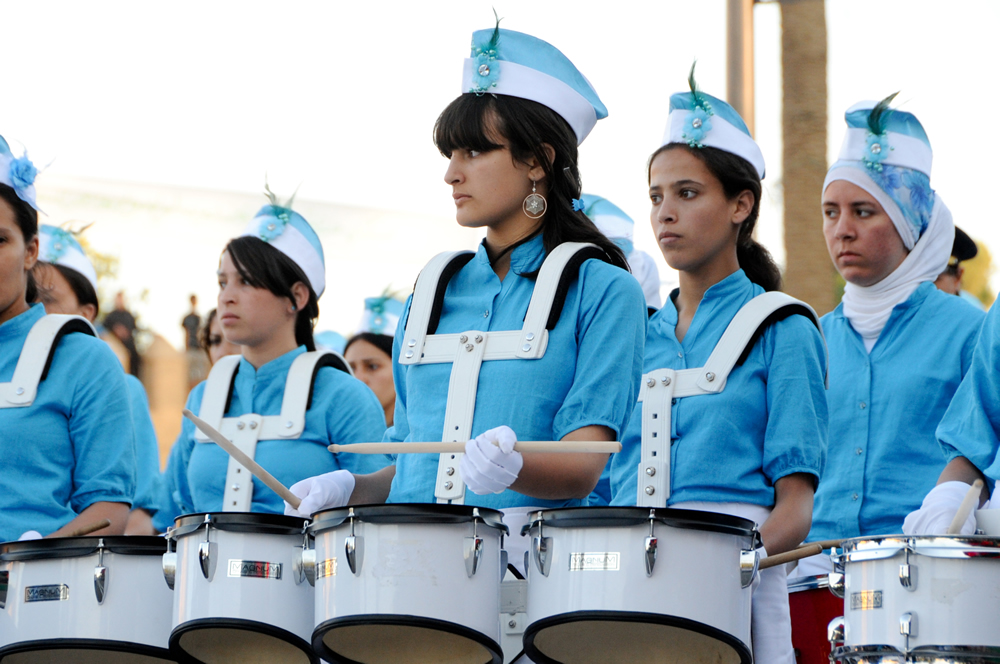
- Ahidous and other Amazigh performances, rural and urban music, majorettes and marching bands
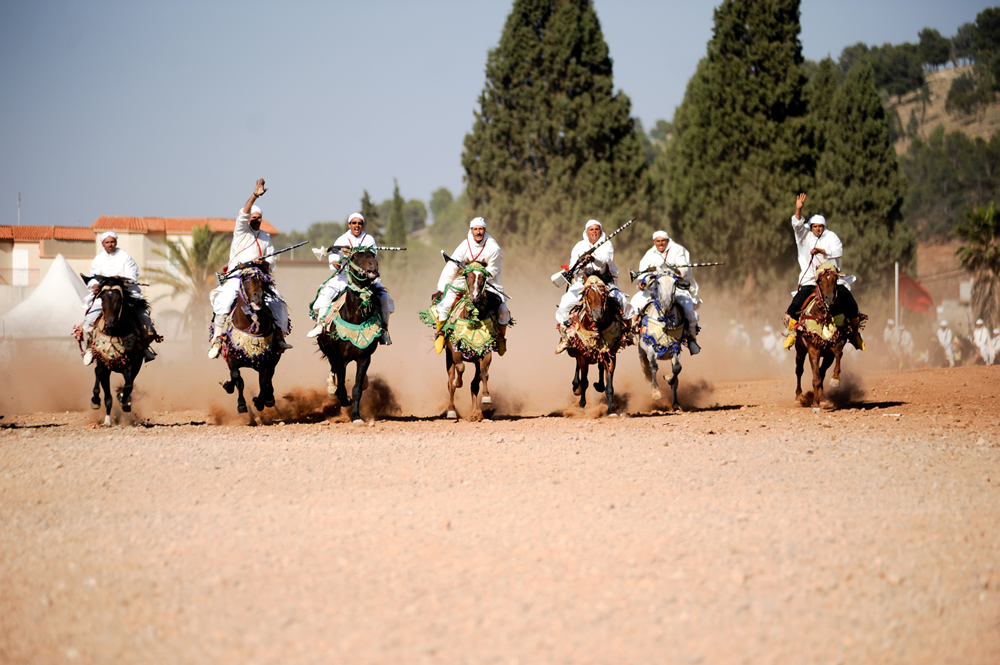
- Fantasia or tbourida equestrian displays in editions where they are scheduled
- Cherry exhibitions, tastings and sales by growers and cooperatives
- Evening concerts by local and nationally known Moroccan artists
- Craft, book, social-economy and local-product exhibitions
- Sports competitions, talks, workshops, visual arts, film screenings and children's activities depending on the annual program
The Cherry Queen and Coronation
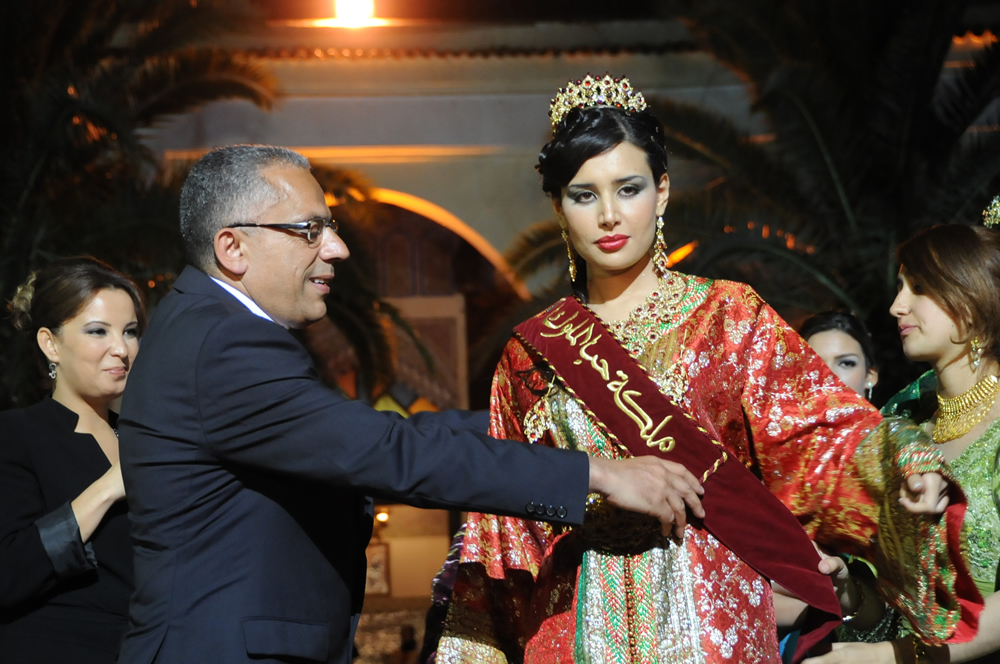
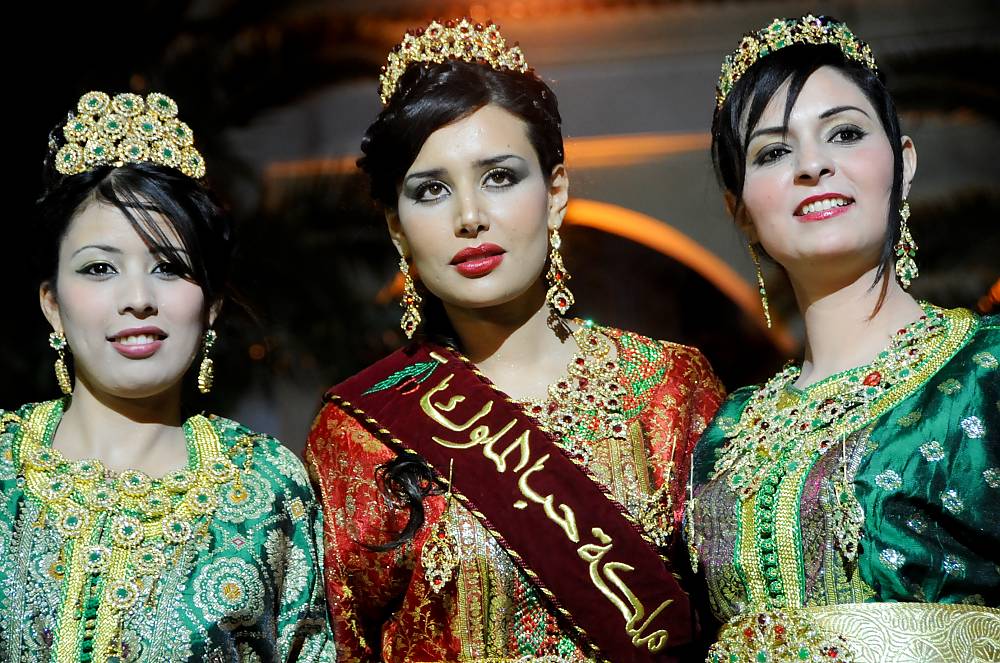
The Cherry Queen, known in French as Miss Cerisette, is chosen through a competition that now attracts candidates from across Morocco. The coronation is a formal public ceremony, followed by appearances with two attendants and participation in the main parade.
During the parade, the Queen wears an ornate Moroccan caftan and traditionally offers cherries to spectators. The ceremony is best understood as one element of a wider community festival, not the festival's only activity.
Ahidous, Majorettes and Fantasia
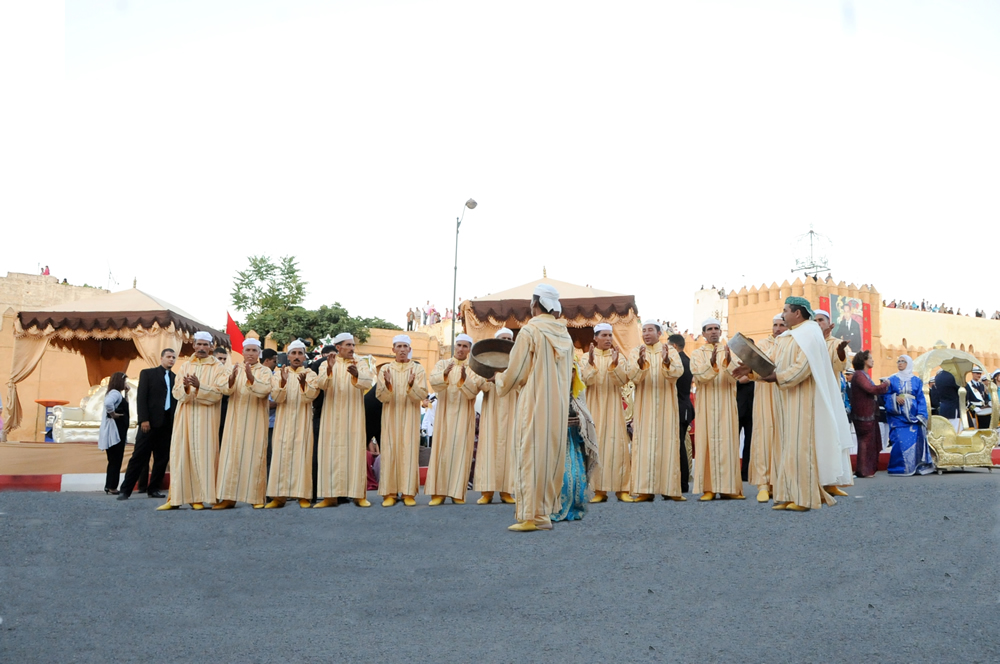
Music and movement animate the parade route. Ahidous troupes perform the collective Amazigh music and dance tradition of the Middle Atlas, combining a line or circle formation with singing, clapping and bendir frame drums.
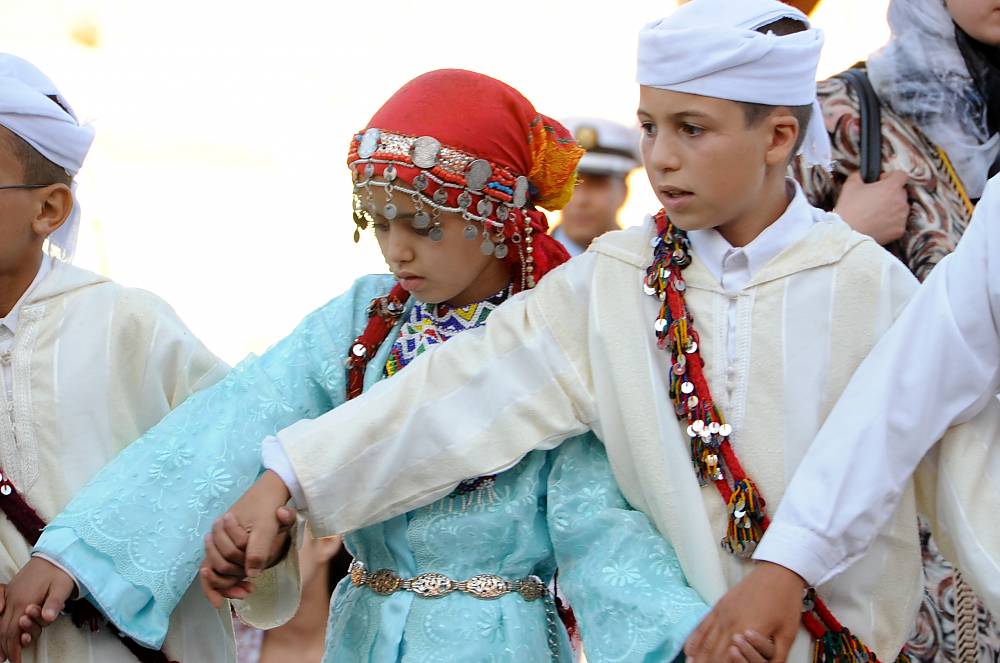
Sefrou's majorettes and marching musicians represent the participation of the town's younger generations. Fantasia horsemen add an equestrian tradition shared by troupes from different parts of Morocco. Exact performers and routes vary each year.
Cherries, Growers, Markets and Local Crafts
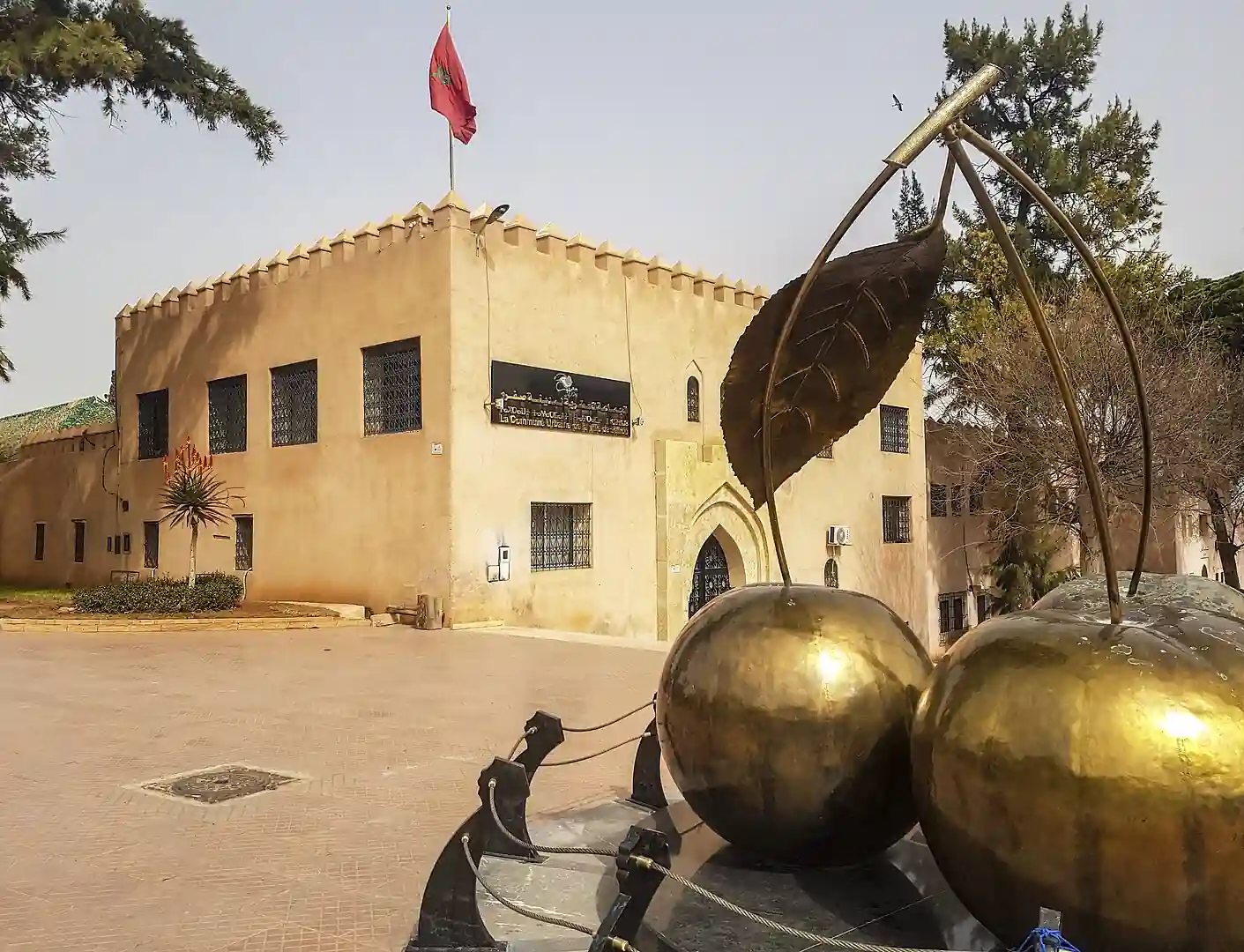
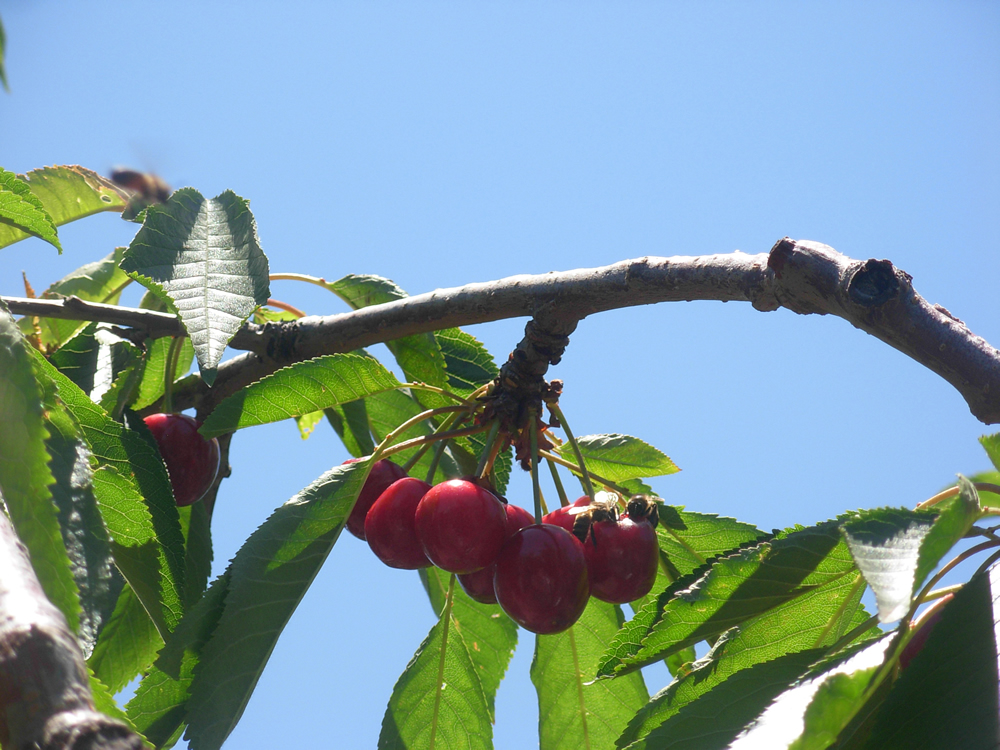
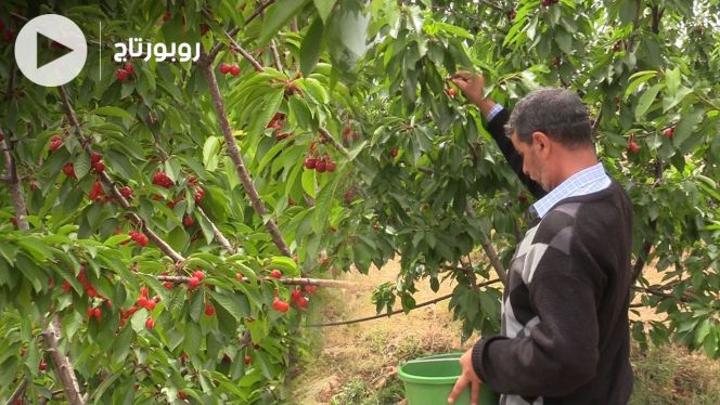
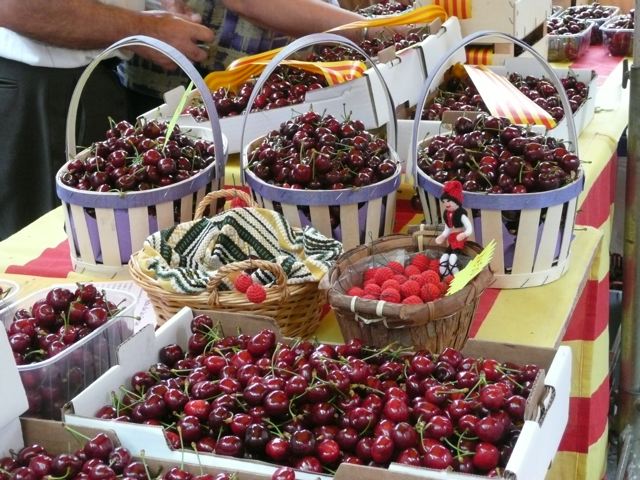
The fruit remains the reason for the celebration. Growers from Sefrou and the surrounding agricultural area present and sell their harvest, while festival exhibitions explain cherry cultivation, processing and the importance of the crop to local identity.
The festival also supports the wider local economy. The 2026 edition included exhibition spaces for cooperatives, artisans and regional products such as honey, argan oil, natural cosmetics, traditional sweets, caftans, djellabas, leatherwork and copperware. UNESCO also highlights the women who make the silk buttons used on ceremonial clothing.
- Buy cherries early in the day, when displays are fullest and the fruit has spent less time in the heat
- Ask vendors which cherries are local and which variety they are selling
- Look for cherry preserves, sweets and products made by local cooperatives
- Visit artisan and social-economy exhibitions for crafts made in Sefrou and the wider Fes-Meknes region
- Annual programs may also include book fairs, workshops, conferences, sports, visual arts and a children's village
Where to Stay for the Cherry Festival
Sefrou itself has very limited accommodation, which is why most festival visitors stay in the surrounding villages or in Fez. Dar Zaytoun in Bhalil is one of the closest guesthouses to the festival — 7 km (about 15 minutes by car) from the heart of Sefrou — while staying far enough away to guarantee quiet nights.
The guesthouse has five traditionally decorated rooms, a swimming pool, a garden, and a rooftop terrace with Middle Atlas views. Breakfast with local products is included, and the hosts can arrange taxis to and from the festival.
Getting There
Sefrou is 28 km south of Fez on the N8 road. From Fez, grand taxis leave regularly from Bab Boujloud and the CTM station (around 20 dirhams per seat). If you are staying at Dar Zaytoun in Bhalil, Sefrou is a 15-minute drive; the guesthouse can arrange transfers, including pickup from Fez-Saïss Airport (35 km, €35 per trip).
Practical Tips
- Book accommodation at least a month ahead — June is high season for the region
- Bring sun protection: daytime parades take place in full sun, with temperatures around 28–34°C
- Combine the festival with a visit to Bhalil's cave houses and Sefrou's medina and waterfalls
- Friday and Saturday evenings are the busiest; the closing ceremony is the highlight
- Cash is essential — stalls and taxis rarely accept cards
Frequently Asked Questions
When is the Sefrou Cherry Festival held?
The Sefrou Cherry Festival takes place every year in June, typically over three days around the middle of the month, coinciding with the cherry harvest. Exact dates are announced each spring by the town of Sefrou.
Is the Sefrou Cherry Festival recognized by UNESCO?
Yes. In 2012 UNESCO inscribed the Cherry Festival of Sefrou on the Representative List of the Intangible Cultural Heritage of Humanity, recognizing its century-old traditions including the crowning of the Cherry Queen.
Where should I stay for the Sefrou Cherry Festival?
Accommodation inside Sefrou is very limited, so most visitors stay nearby. Dar Zaytoun in Bhalil is 7 km (15 minutes) from the festival — one of the closest guesthouses — with 5 rooms, a pool, and included breakfast.
How do I get to Sefrou from Fez?
Sefrou is 28 km south of Fez via the N8 road — about 30–40 minutes by car or grand taxi. Grand taxis depart regularly from Fez and cost around 20 dirhams per seat.
What is Sefrou famous for besides cherries?
Sefrou is known for its walled old medina, Oued Aggai river, waterfall, gardens, traditional crafts, historic Jewish mellah and its position at the foot of the Middle Atlas.
Is Sefrou's medina a UNESCO World Heritage Site?
The UNESCO inscription applies to the Cherry Festival as intangible cultural heritage. Sefrou's medina is historically important, but visitors should not describe the whole medina as a UNESCO World Heritage Site.
What is the Jewish history of Sefrou?
Sefrou once had one of Morocco's most important Jewish communities and was known as Little Jerusalem. The former mellah contained homes, shops, schools and synagogues. Most Jewish families left by the late 1960s, but the heritage remains part of the city's history.