Travel Guide
Best Things to Do in Fez and Day Trips: Complete Independent Guide

Fez is not merely a base for excursions. Its UNESCO-listed medina, Marinid madrasas, mosques, fondouks, food markets and specialised craft quarters deserve at least two unhurried days before you travel outside the city. Fez el-Bali remains a living urban system rather than a collection of isolated monuments, while Fez el-Jdid adds the Royal Palace precinct, the historic Mellah and important Jewish heritage.
Once you have given Fez proper time, the city is also an excellent base for exploring three very different landscapes: the Saïs plain and Middle Atlas foothills to the south, the imperial and Roman heritage corridor to the west, and the Rif Mountains to the north. Within one long day you can visit a living cave-house village, enter an Amazigh market town, cross cedar forest, study Roman mosaics or explore another imperial city.
The important question is not simply what can be reached, but what can be enjoyed without spending the whole day in a vehicle. This guide separates comfortable half-day and full-day outings from rushed routes that are widely sold online. Drive times are realistic ranges from central Fez, not promises: medina pickup logistics, traffic, weather and roadworks can all add time.
Tripadvisor reviews were used to identify repeated visitor experiences—medina navigation and sales pressure in Fez, limited interpretation at some monuments, little shade at Volubilis, crowded macaque stops and the very long Chefchaouen drive—then historical and conservation claims were checked against UNESCO, Morocco's tourism office, ONCF information and published wildlife research. Ratings, admission prices and fixed opening times are deliberately omitted because they change quickly.
Do Not Leave Fez Too Quickly
Give Fez at least two full days before sacrificing one to a long excursion. UNESCO traces the historic city to two fortified Idrisid settlements founded between 789 and 808 on opposite banks of the Fez River. The Almoravids later united them, and the city reached a major architectural and political height under the Marinids in the thirteenth and fourteenth centuries. That history survives not only in monuments but also in the street plan, neighbourhood markets, fountains, workshops and religious life.
The essential first day is Fez el-Bali: enter near Bab Bou Jeloud, visit a Marinid madrasa, follow the Tala'a streets toward the Qarawiyyin quarter, stop at Nejjarine, Seffarine and the tanneries, and allow time to get pleasantly diverted. A second day can connect Fez el-Jdid, the Royal Palace exterior, the Mellah, Jewish heritage, Jnan Sbil and a panoramic ridge viewpoint.
Tripadvisor reviews repeatedly praise the medina's density and craftsmanship but also describe navigation difficulty, insistent unofficial guides and shop pressure around popular viewpoints. A licensed local guide is worthwhile for a first half-day if they agree to a history-focused route with no shopping stops unless requested. Independent visitors should download an offline map, record the nearest vehicle-access gate and avoid following strangers who claim a street is closed.
- Only one day: Fez el-Bali monuments, Nejjarine, Seffarine and one tannery view
- Two days: add Fez el-Jdid, Mellah, Ibn Danan Synagogue, Jnan Sbil and a viewpoint
- Three days: add a cooking class, food-market walk, pottery or zellige workshop and slower neighbourhood exploration
- Half-day remaining: stay in Fez rather than spending most of it driving to another city
Fez el-Bali: Gates, Madrasas and the Sacred Core
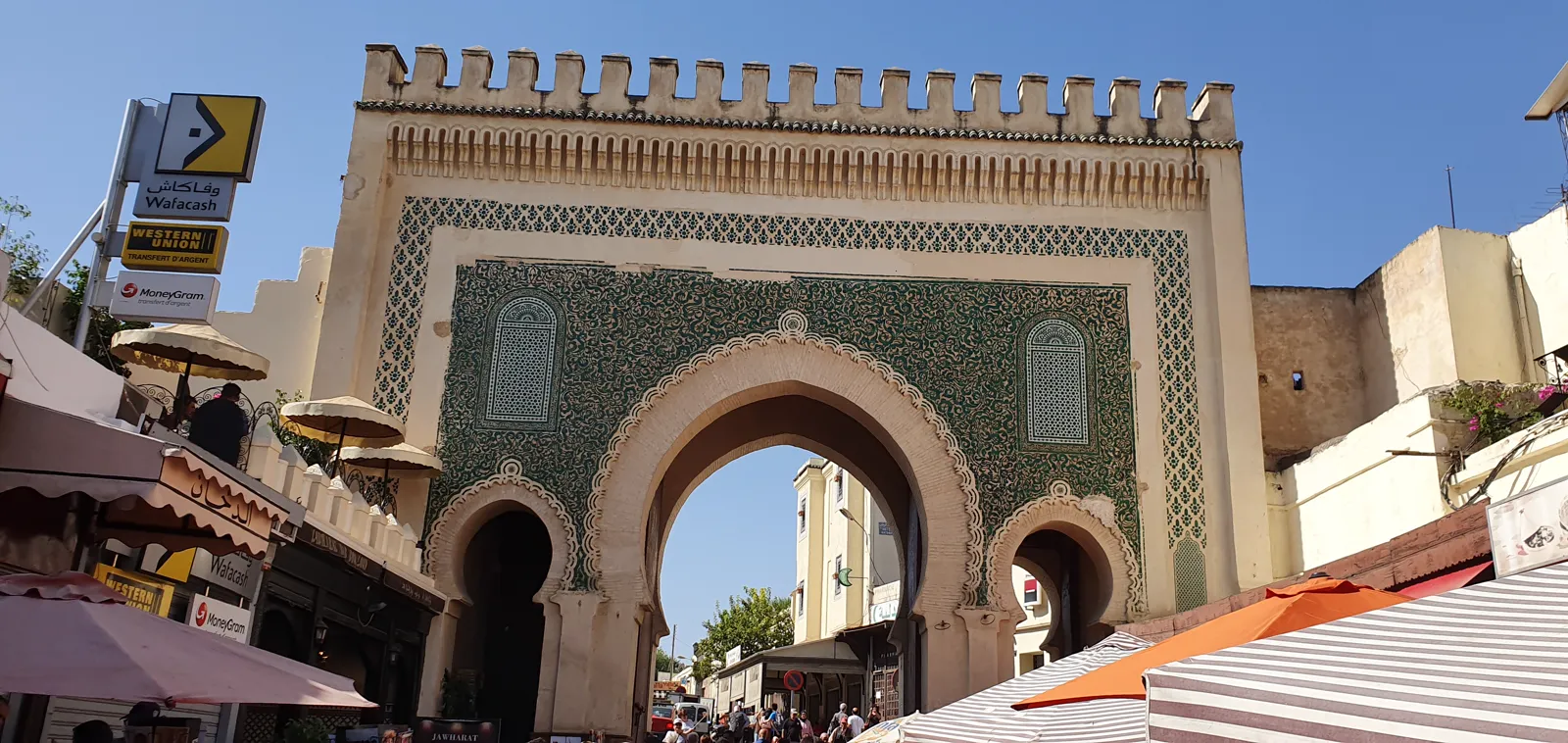
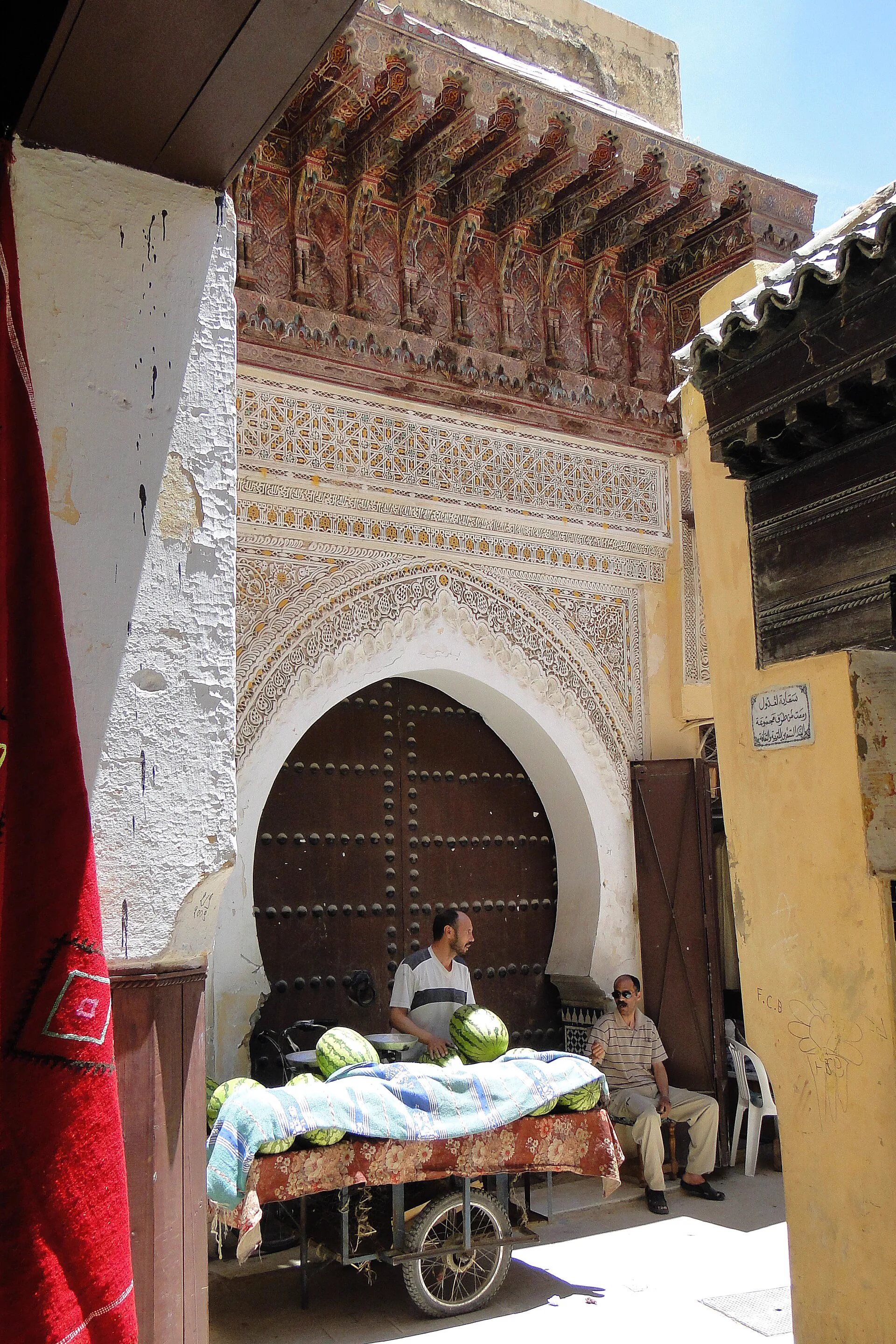
Bab Bou Jeloud is the easiest orientation point for a first medina walk. The present ceremonial gate dates from the early twentieth century, but it opens directly toward the older urban fabric and the two principal descending streets, Tala'a Kebira and Tala'a Sghira. Nearby Bou Inania Madrasa is one of Fez's finest Marinid monuments, combining zellige, carved plaster, cedar and a functioning religious complex around a courtyard.
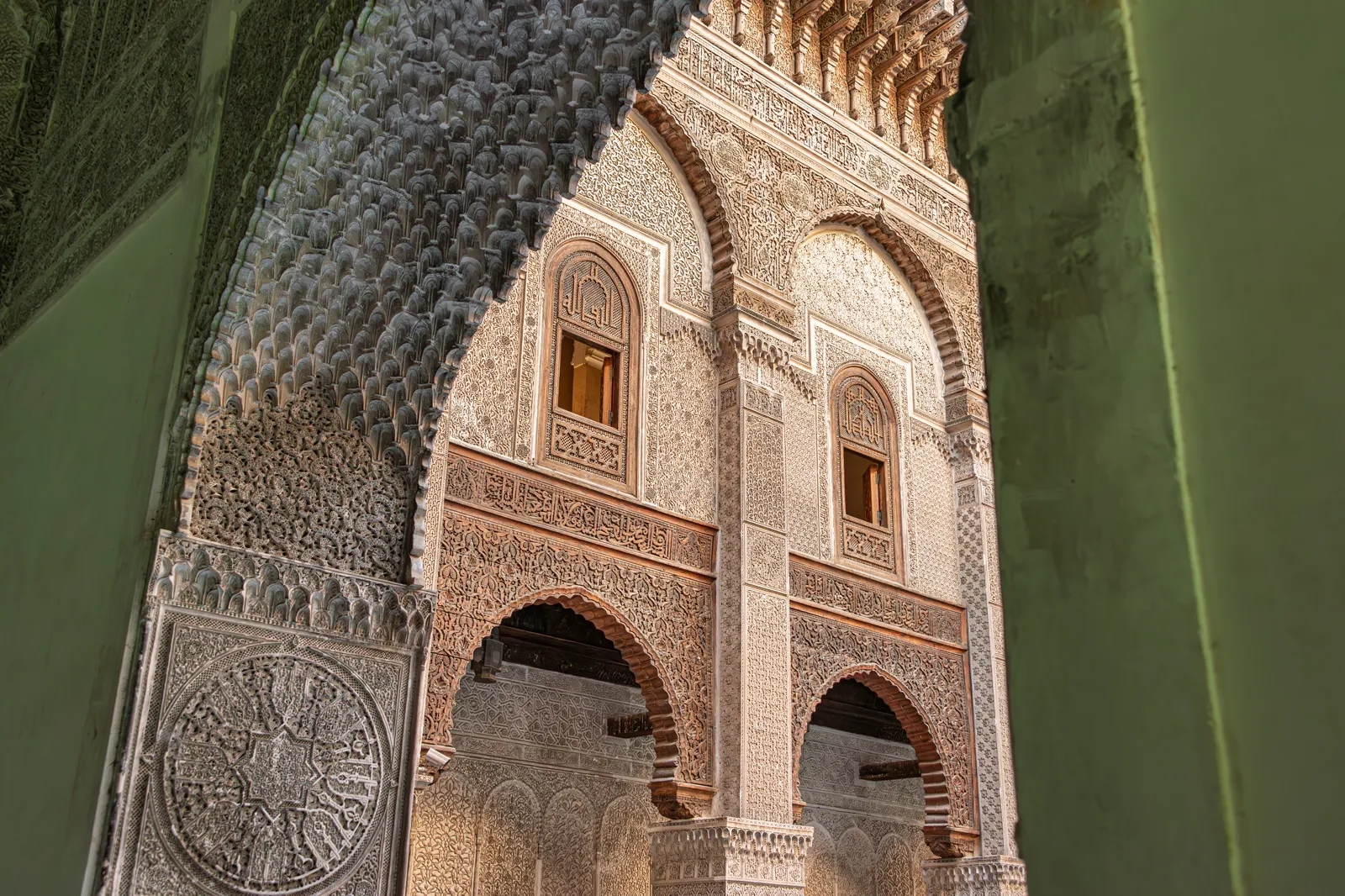
Deeper in the medina, Al-Attarine Madrasa offers a smaller and more intimate display of early fourteenth-century Marinid decoration. Recent Tripadvisor visitors particularly value the upper student rooms and close views of carved wood, stucco and tilework. Capacity is limited, so an early visit is calmer and makes the narrow stairs easier.
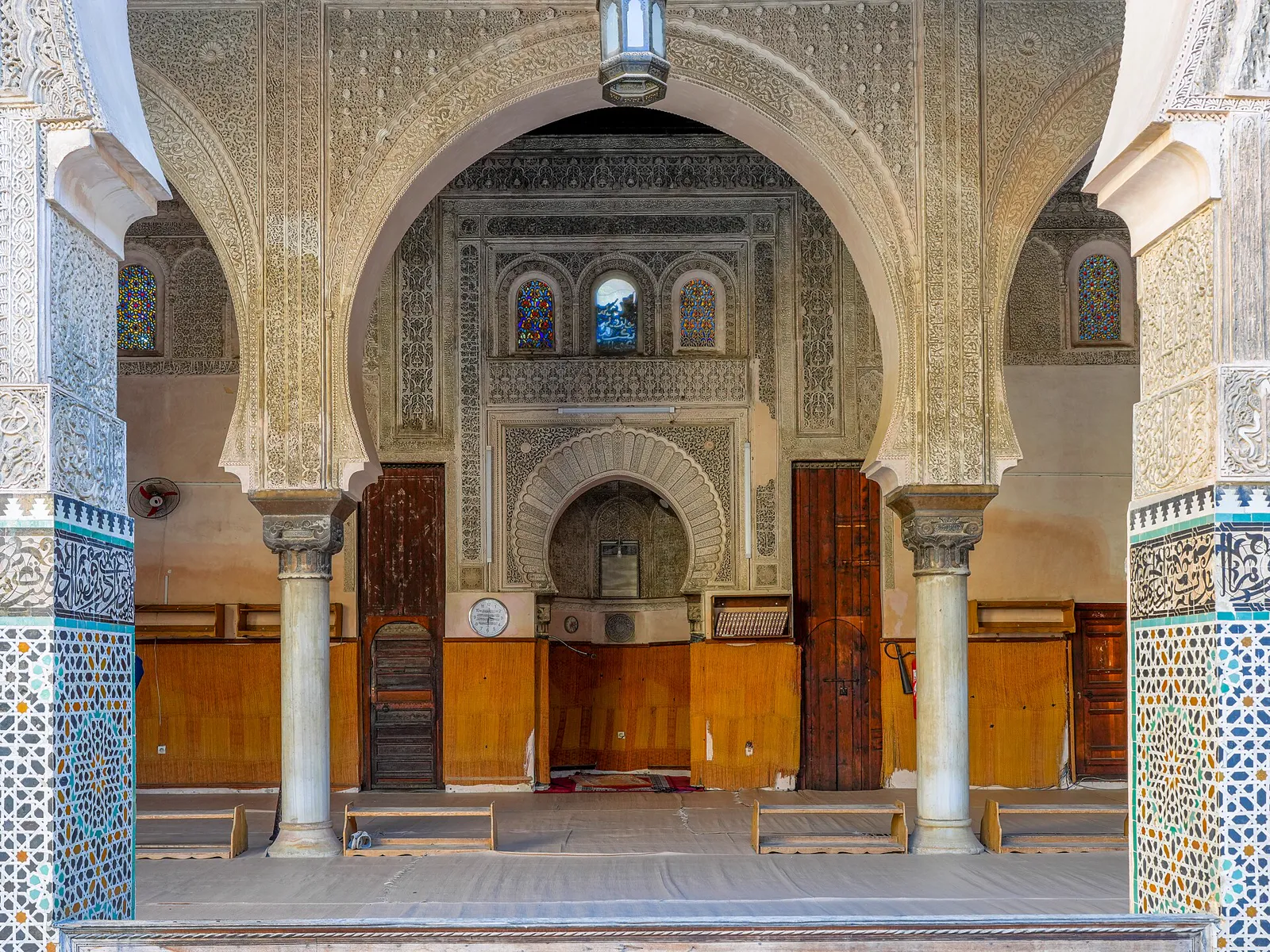
The Qarawiyyin Mosque and scholarly complex has shaped Fez's religious and intellectual life for centuries. General tourist access to the prayer space is restricted, so non-Muslim visitors should appreciate its courtyards and architecture respectfully from permitted thresholds rather than trying to enter. The nearby Zaouia of Moulay Idriss II is also an active sanctuary with a clearly marked access limit for non-Muslims.
Opening hours, restoration work, religious services and Friday schedules can change access to individual monuments. Verify on the day and never build a route around an old online timetable. Dress modestly, lower your voice at sanctuary entrances and do not photograph people at prayer without permission.
Nejjarine, Seffarine and Fez's Living Crafts
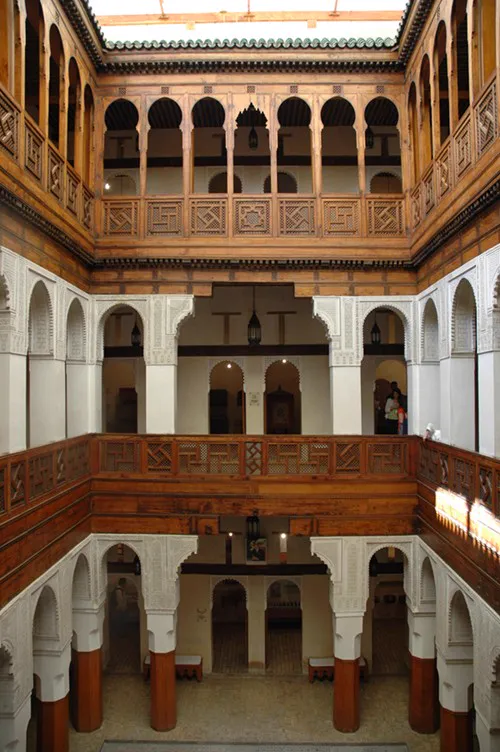
The Nejjarine Museum of Wooden Arts and Crafts occupies a restored fondouk, a merchant inn organised around a tall courtyard. Tripadvisor feedback often finds the building as compelling as the collection: carved doors, chests, architectural woodwork, tools and domestic objects explain why cedar craftsmanship is central to Fez. The rooftop is also a useful pause above the crowded lanes. Photography rules may vary inside, so ask before taking pictures.
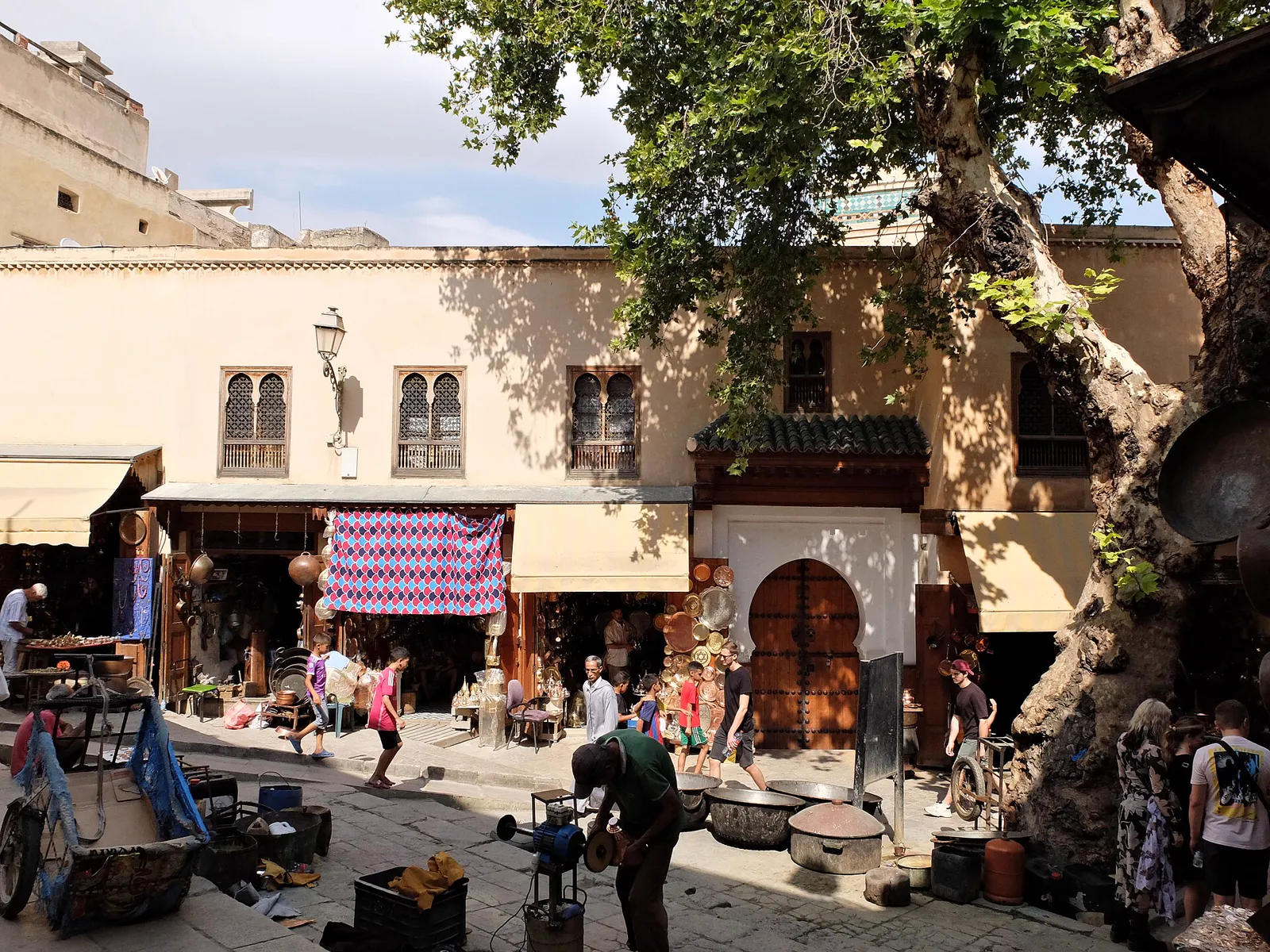
Nearby Place Seffarine is recognised by sound before sight. Metalworkers hammer trays, pots and vessels in and around the small square beside the Qarawiyyin complex. This is a working craft district, not a staged demonstration. Stand clear of active work, ask before close portraits and expect workshop rhythms to vary by weekday, season and prayer time.
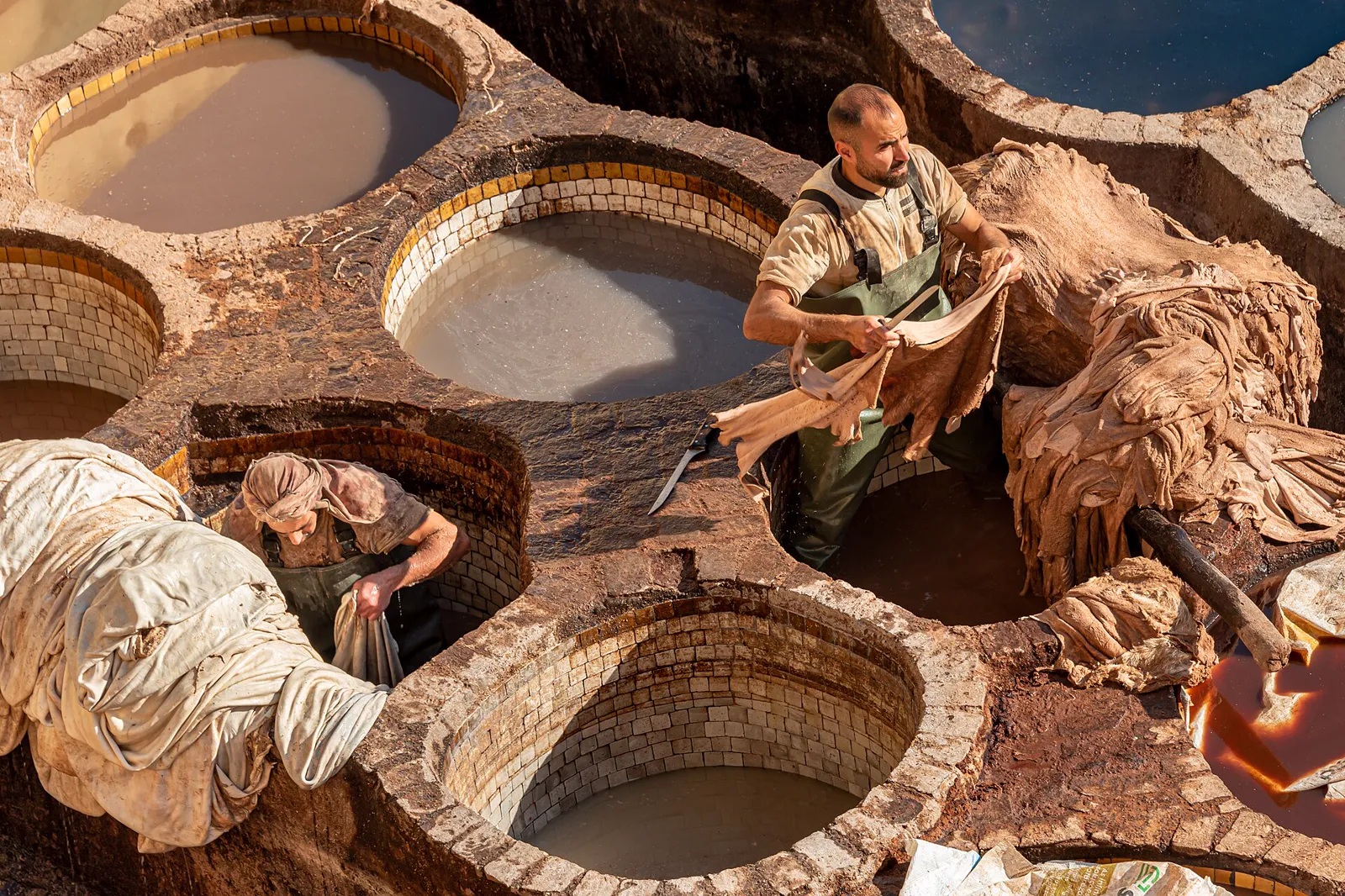
Chouara is the best-known tannery, viewed from terraces belonging to surrounding leather shops. The process is visually powerful and the smell can be intense, but access is commercially complicated: there is no single official public viewing platform, a mint sprig does not create an obligation to buy, and a terrace visit may end in a sales pitch. Agree whether any fee or purchase expectation exists before climbing, keep children away from terrace edges and do not interrupt workers.
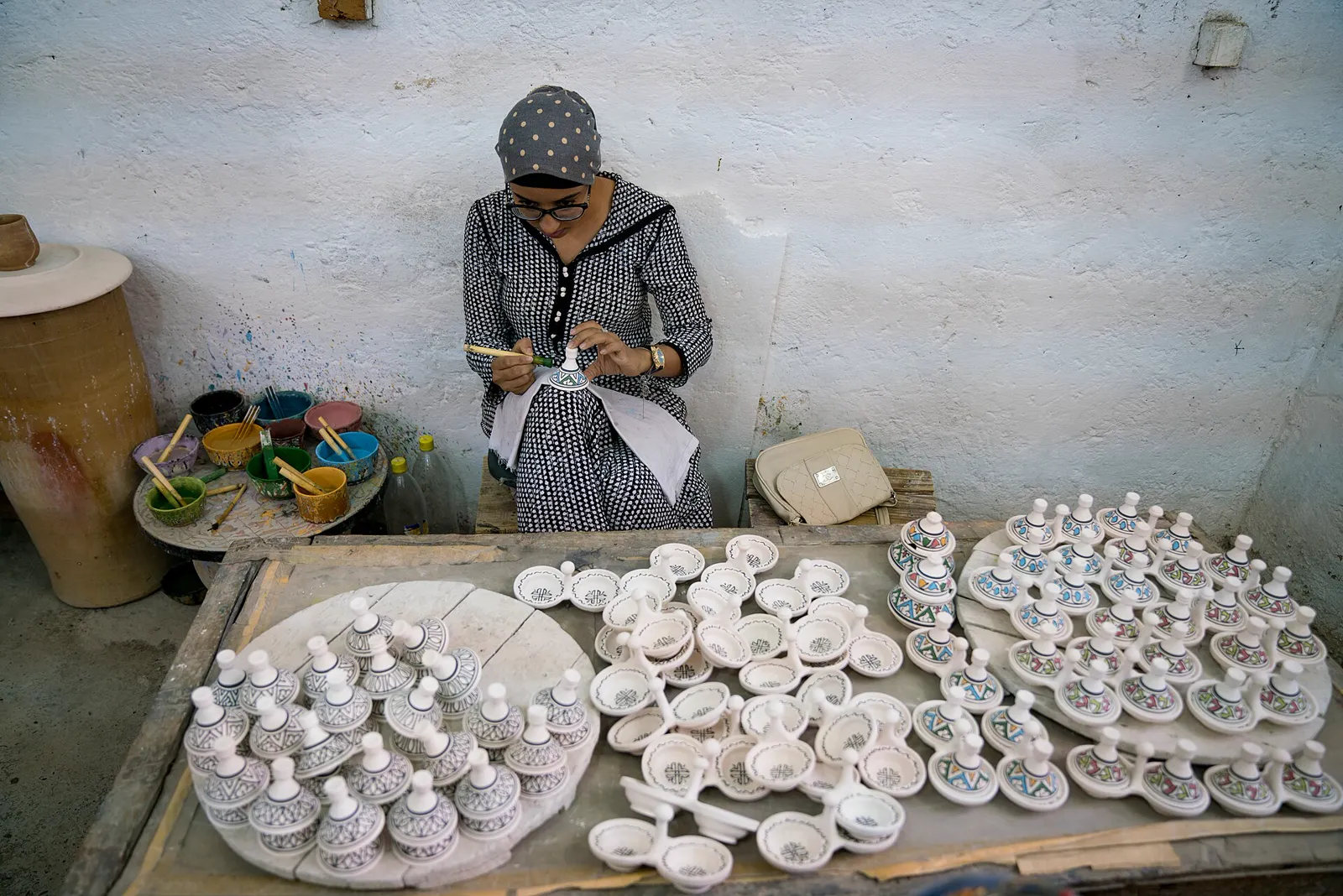
For a deeper craft experience, arrange a reputable pottery, zellige, brass, embroidery or cooking workshop where teaching—not shopping—is the stated purpose. Ask who teaches, how long hands-on work lasts, whether transport is included and whether finished pieces can realistically be shipped. Responsible visits recognise artisans as skilled professionals rather than photo props.
Fez el-Jdid, the Mellah and Jnan Sbil
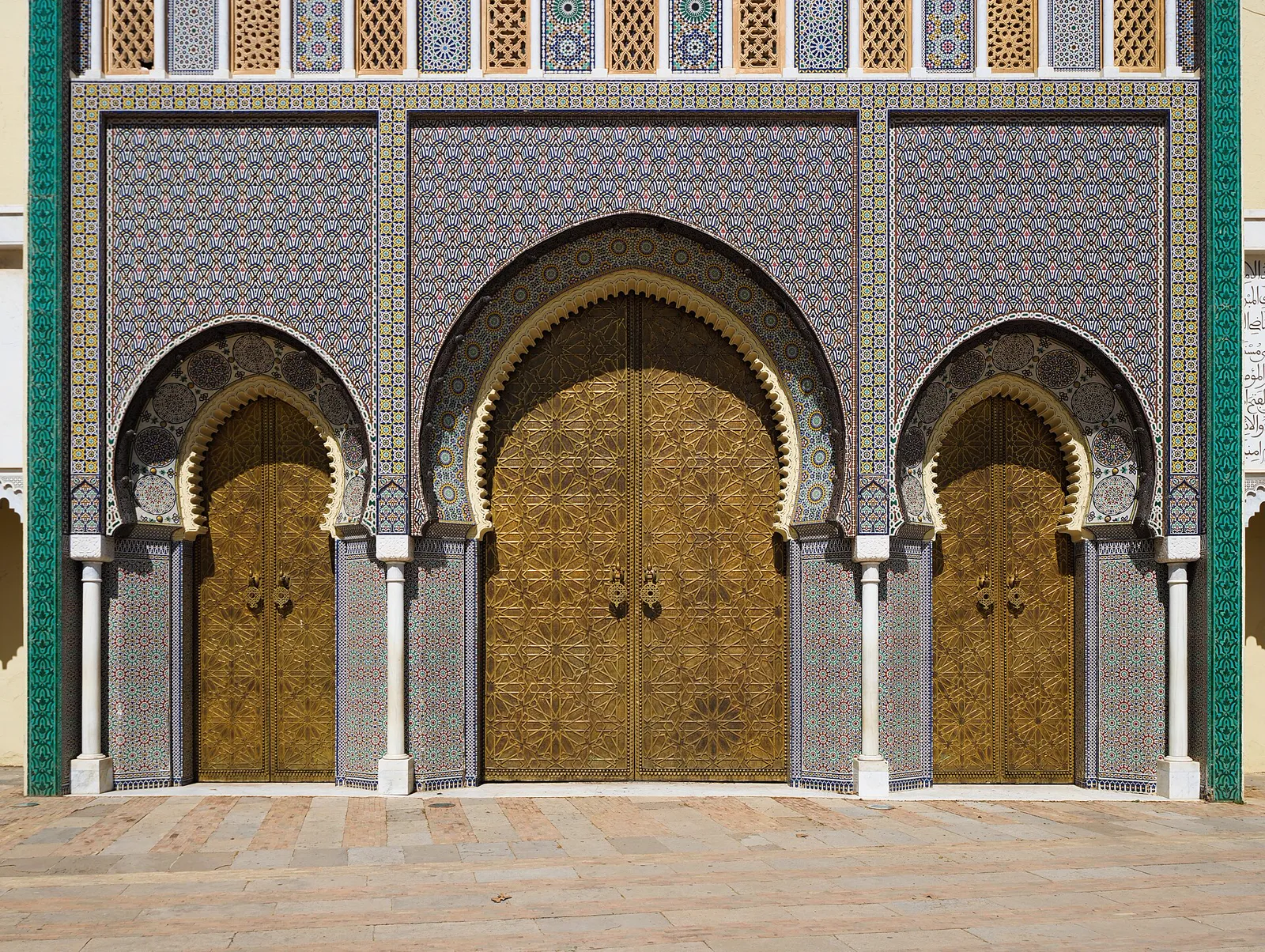
The Marinids founded Fez el-Jdid in 1276 as a new royal and administrative city west of Fez el-Bali. Its most photographed landmark is the Royal Palace entrance at Place des Alaouites. The palace is not open for public touring; the experience is the exterior composition of monumental doors, zellige and carved decoration, not an interior visit.
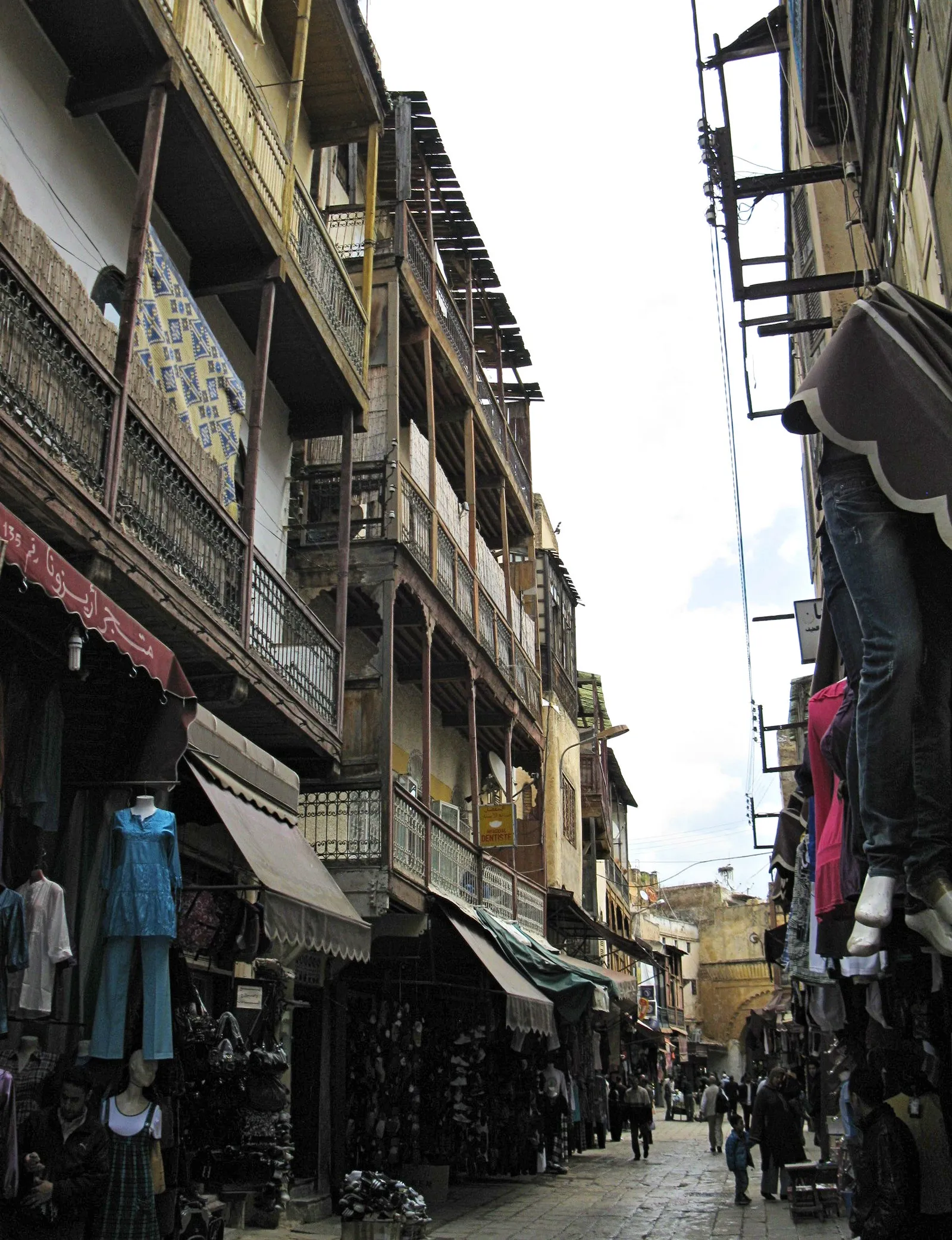
South of the palace lies the Mellah, the historic Jewish quarter. Its street-facing wooden and iron balconies create an architectural contrast with many inward-looking medina houses. Treat the district as a living neighbourhood rather than reducing it to a shopping street. Jewish history in Fez is long, layered and essential to understanding the city's multicultural development.
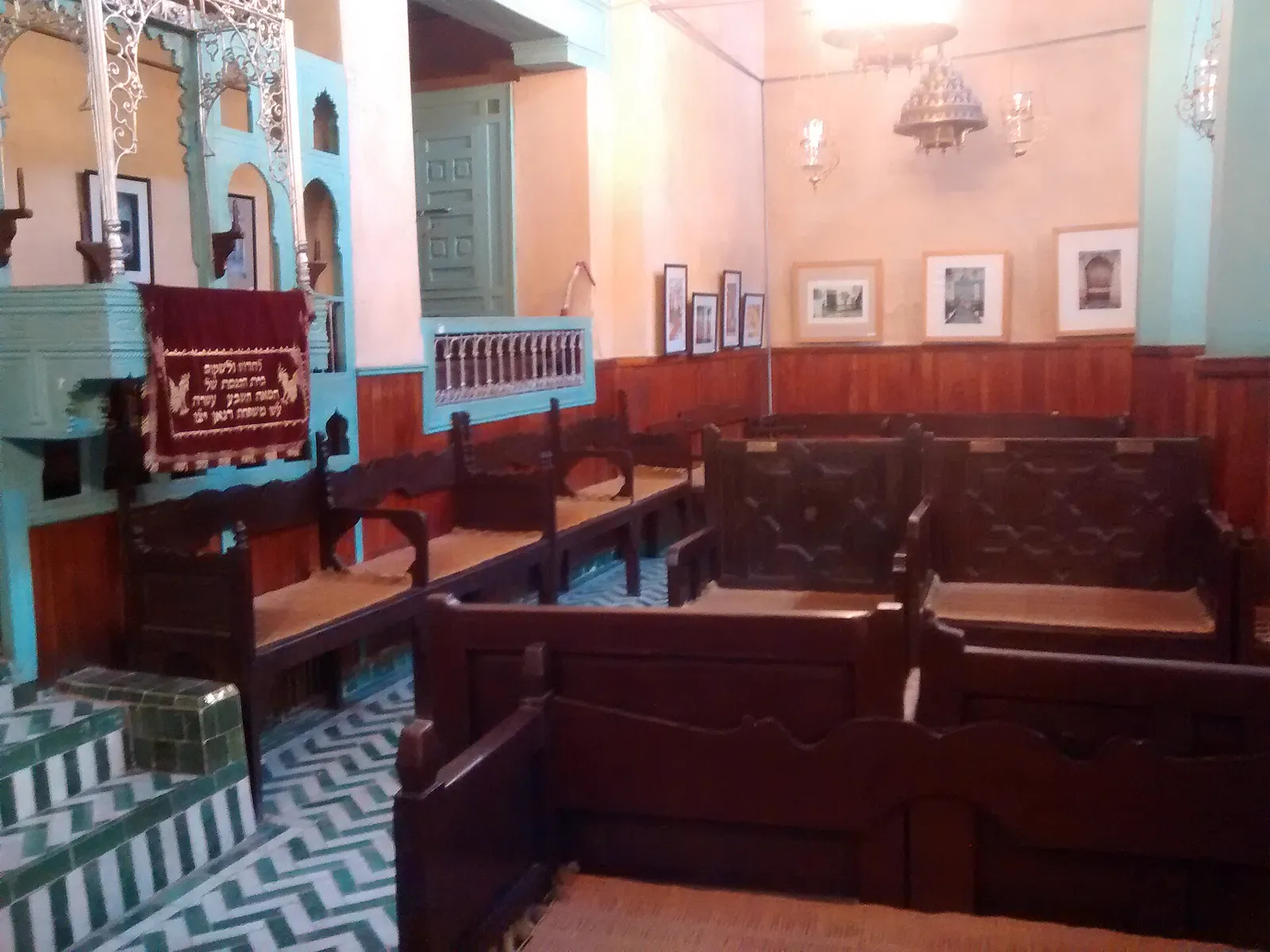
The seventeenth-century Ibn Danan Synagogue and the nearby Jewish cemetery are the most meaningful heritage stops. Access, caretaker availability, entrance arrangements and photography rules can change, so confirm locally before setting out. Dress respectfully and remember that the cemetery is a sacred place, not simply a panoramic backdrop.
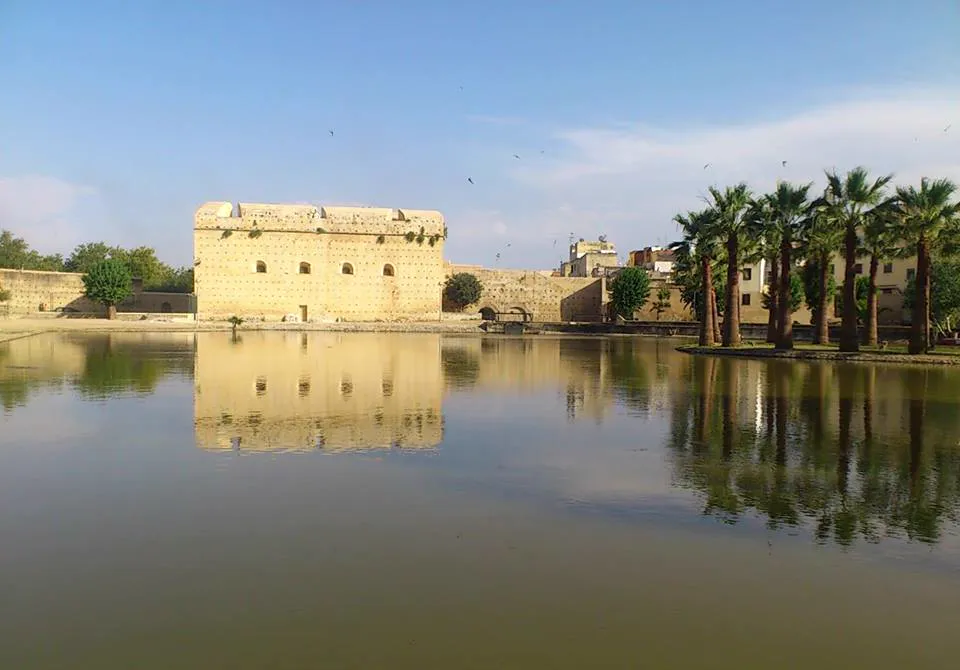
Jnan Sbil provides the best green pause between Fez el-Bali and Fez el-Jdid, with water channels, mature trees and shaded paths. It is particularly useful after a dense medina morning, but gates and maintenance closures vary. Combine it geographically with Bab Bou Jeloud and the Mellah rather than making a separate cross-city journey.
See Fez from Above: Marinid Tombs and Borj Nord
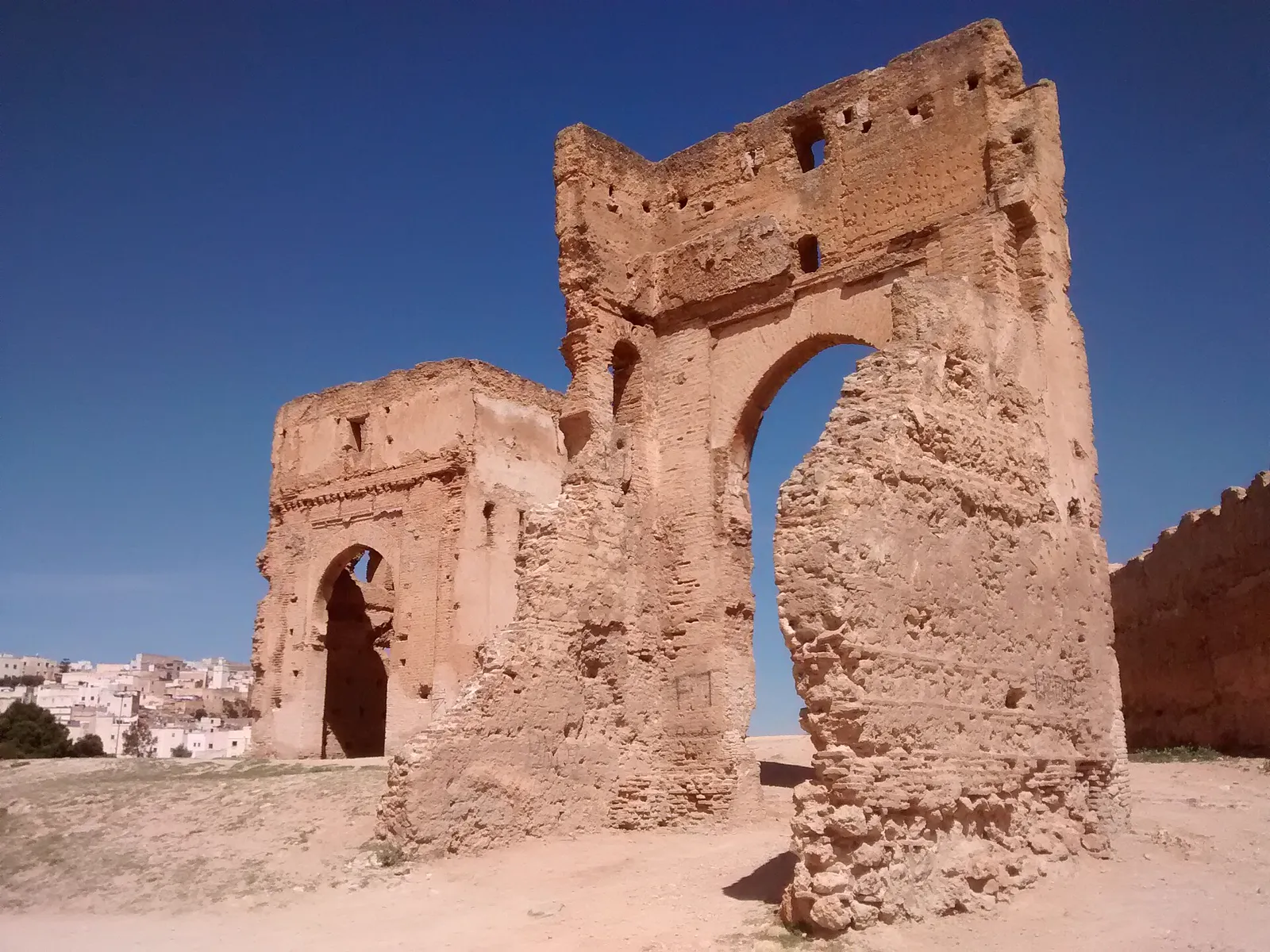
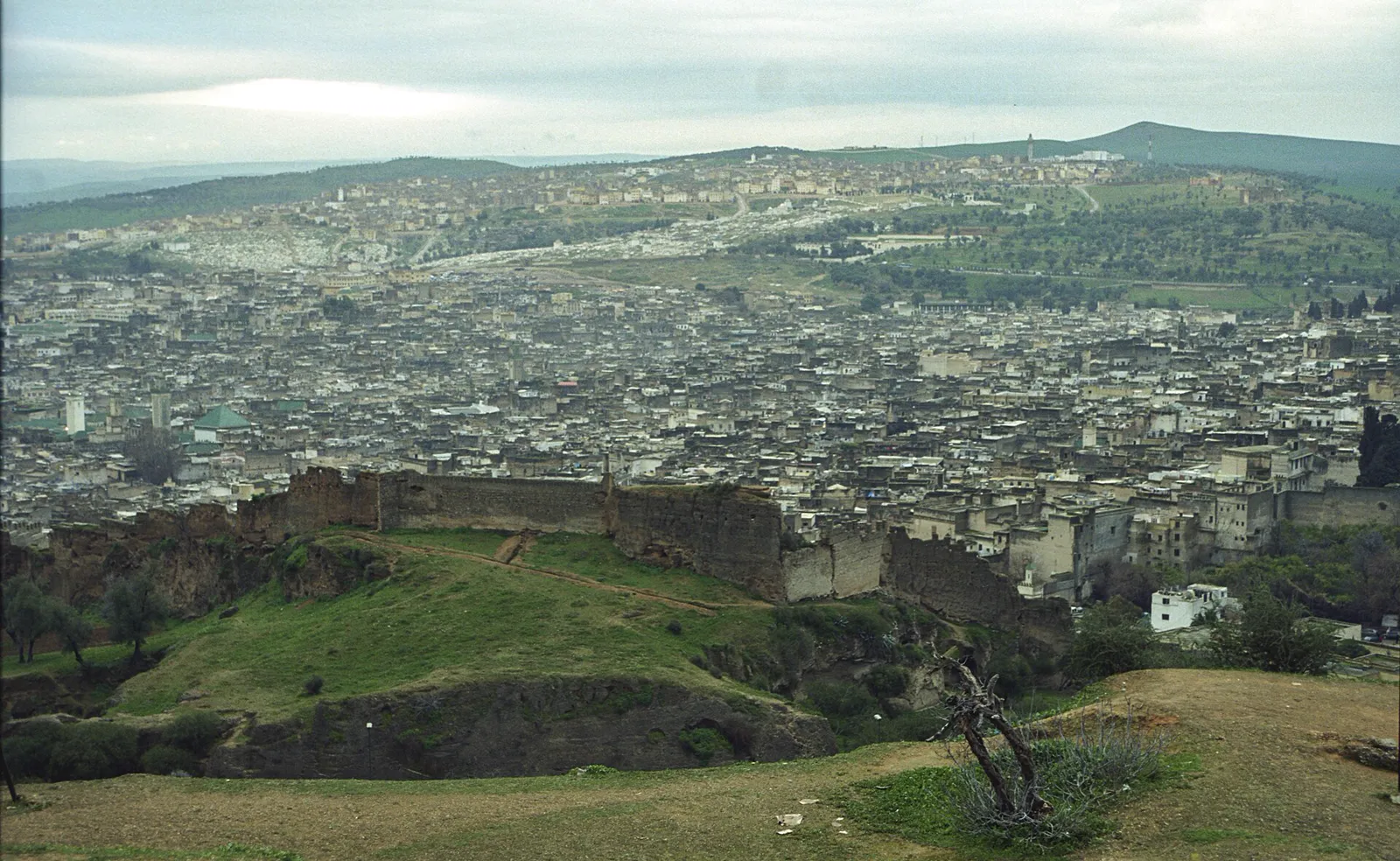
The north ridge gives the clearest explanation of Fez's scale. From the Marinid Tombs area you can distinguish the dense roofscape of Fez el-Bali, green-tiled religious buildings, walls, cemeteries and the newer city beyond. The surviving tomb structures are fragmentary; the principal reward is the view and the spatial context it gives the following day's medina walk.
Borj Nord, a late sixteenth-century fortress nearby, houses an arms museum when open and offers another elevated perspective. Recent Tripadvisor reports indicate that restoration closures have occurred, so verify museum access rather than assuming the interior is available. The exterior viewpoint is still useful, but it is not identical to the Marinid Tombs panorama.
Sunset is popular, exposed and often busy. There is little shade, footing around the ruins is rough and the descent is less comfortable after dark. Use a petit taxi if heat, mobility or fading light is a concern, arrange the return in advance and never climb unstable walls for photographs.
Two Strong Days Inside Fez
Day one should be almost entirely pedestrian. Start early at Bab Bou Jeloud and Bou Inania, descend one Tala'a street, cross toward Nejjarine and the Qarawiyyin quarter, visit Al-Attarine, listen to the metalworkers at Seffarine and finish with Chouara or another tannery terrace. The sequence is intentionally flexible because medina discoveries, prayer times and temporary closures will reshape it.
Day two connects sites that are farther apart. Begin at the Royal Palace exterior, continue through the Mellah to Ibn Danan Synagogue and the Jewish cemetery if access is confirmed, rest in Jnan Sbil, then choose either a museum or craft workshop. Finish at the Marinid Tombs or Borj Nord only if weather and daylight are suitable.
Families should shorten each day and include a garden or hands-on workshop. Travellers with limited mobility will find Fez el-Bali difficult: routes include slopes, polished paving, thresholds, crowds and occasional steps. A guide can plan a gate-to-gate route, but there is no fully step-free circuit through the historic core. Vehicle pickup must be arranged at an accessible gate rather than a riad door.
- Medina day: Bab Bou Jeloud → Bou Inania → Tala'a lanes → Nejjarine → Qarawiyyin thresholds → Al-Attarine → Seffarine → tannery
- Heritage day: Royal Palace exterior → Mellah → synagogue and cemetery if open → Jnan Sbil → museum or workshop → ridge viewpoint
- Food experience: visit a produce and spice market with a cook, prepare lunch, and keep the afternoon light
- Rain or extreme heat: prioritise madrasas, Nejjarine and a workshop; avoid exposed ridge and archaeological stops
Choose the Right Day Trip
For a calm local day, choose Bhalil and Sefrou. For mountain scenery and cooler air, choose Ifrane, Azrou and the cedar forest. For the strongest archaeology, give Volubilis and Moulay Idriss most of the day. For urban history without a driver, take the train to Meknes. Moulay Yacoub works as a spa-focused half-day, while Chefchaouen is possible but much better as an overnight stay.
- Bhalil + Sefrou: about 30–45 minutes each way; 5–8 hours; best for living heritage, crafts, medina lanes and a slower local encounter
- Ifrane + Azrou + cedar forest: about 75–100 minutes to the main stops; 7–9 hours; best for landscapes, families and a break from Fez heat
- Volubilis + Moulay Idriss: roughly 1 hour 45 minutes to 2 hours each way; 8–10 hours; best for archaeology, mosaics and early Moroccan history
- Meknes alone: roughly 1–1.5 hours by road and also practical by train; 7–9 hours; best for an unrushed imperial-city day
- Volubilis + Moulay Idriss + Meknes: 10–12 hours; possible with a driver, but only satisfying with an early start and strict priorities
- Moulay Yacoub: roughly 35–50 minutes each way; 4–6 hours; best when the thermal spa itself is the purpose of the outing
- Chefchaouen: commonly 3.5–4 hours each way; usually 12–14 hours door to door; choose an overnight if your itinerary allows
Bhalil and Sefrou: The Closest Cultural Escape
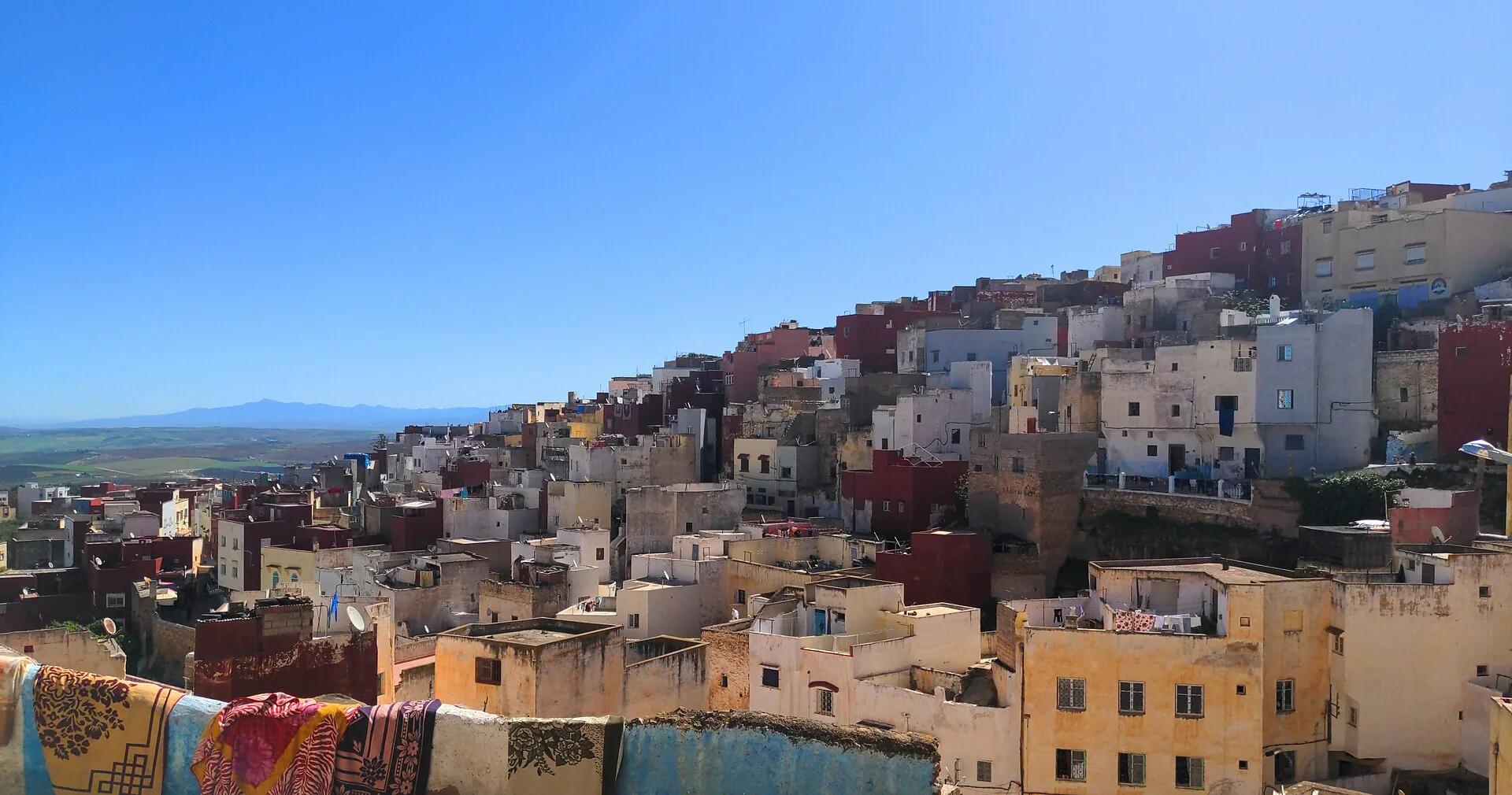
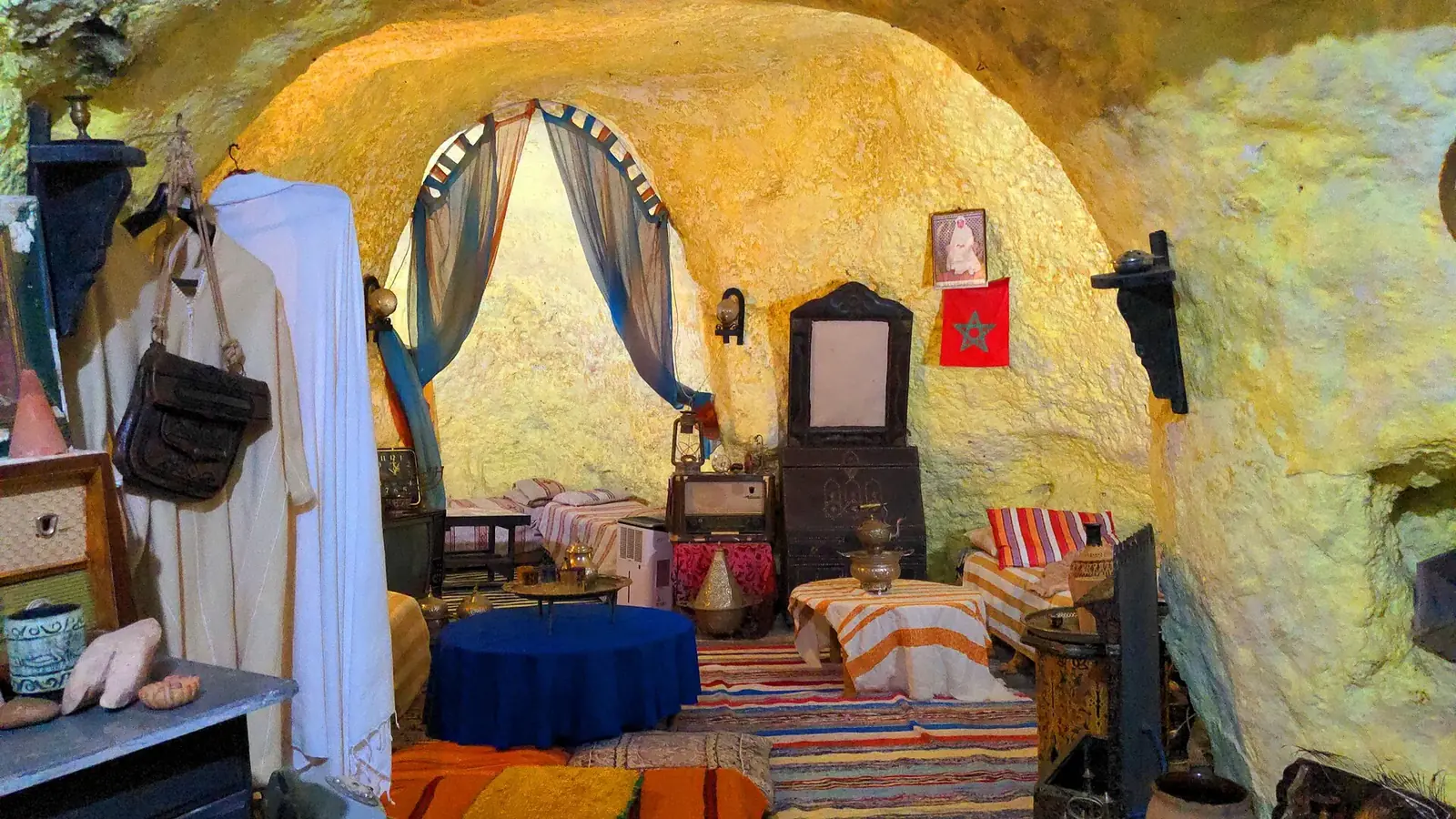
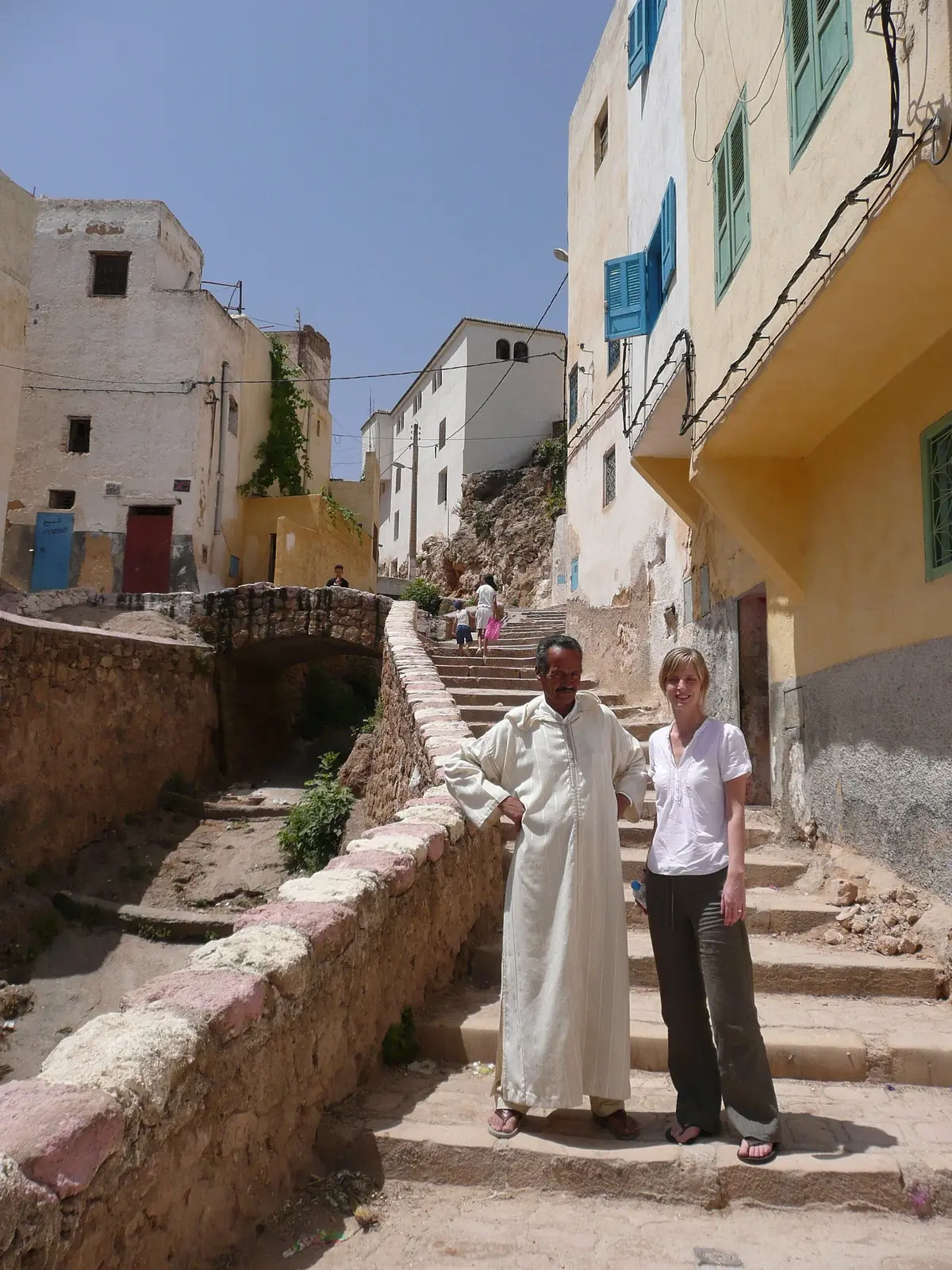
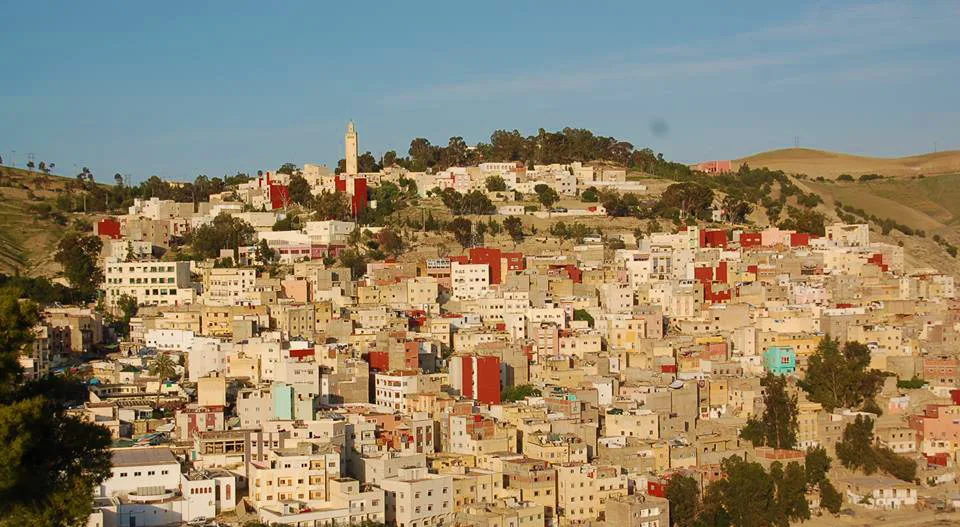
Bhalil and Sefrou lie close together south-east of Fez but tell different stories. Bhalil climbs a limestone hillside. Its old quarters contain rock-cut rooms joined to later masonry houses, steep stepped lanes, springs and household crafts. These are private homes rather than a public cave museum, so the best visit is pre-arranged with a resident or local host, includes permission before photography and leaves time for conversation rather than a quick doorway inspection.
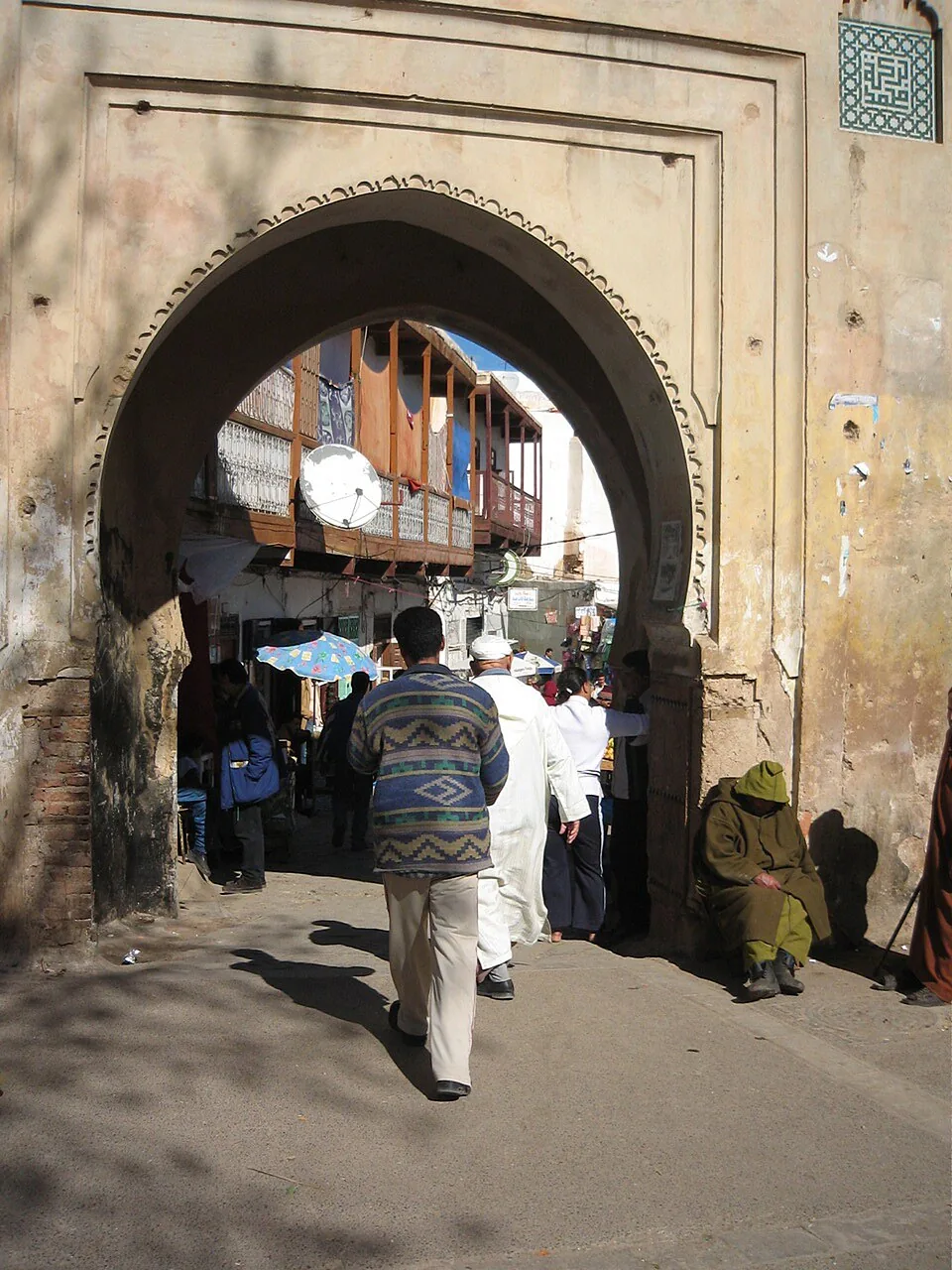
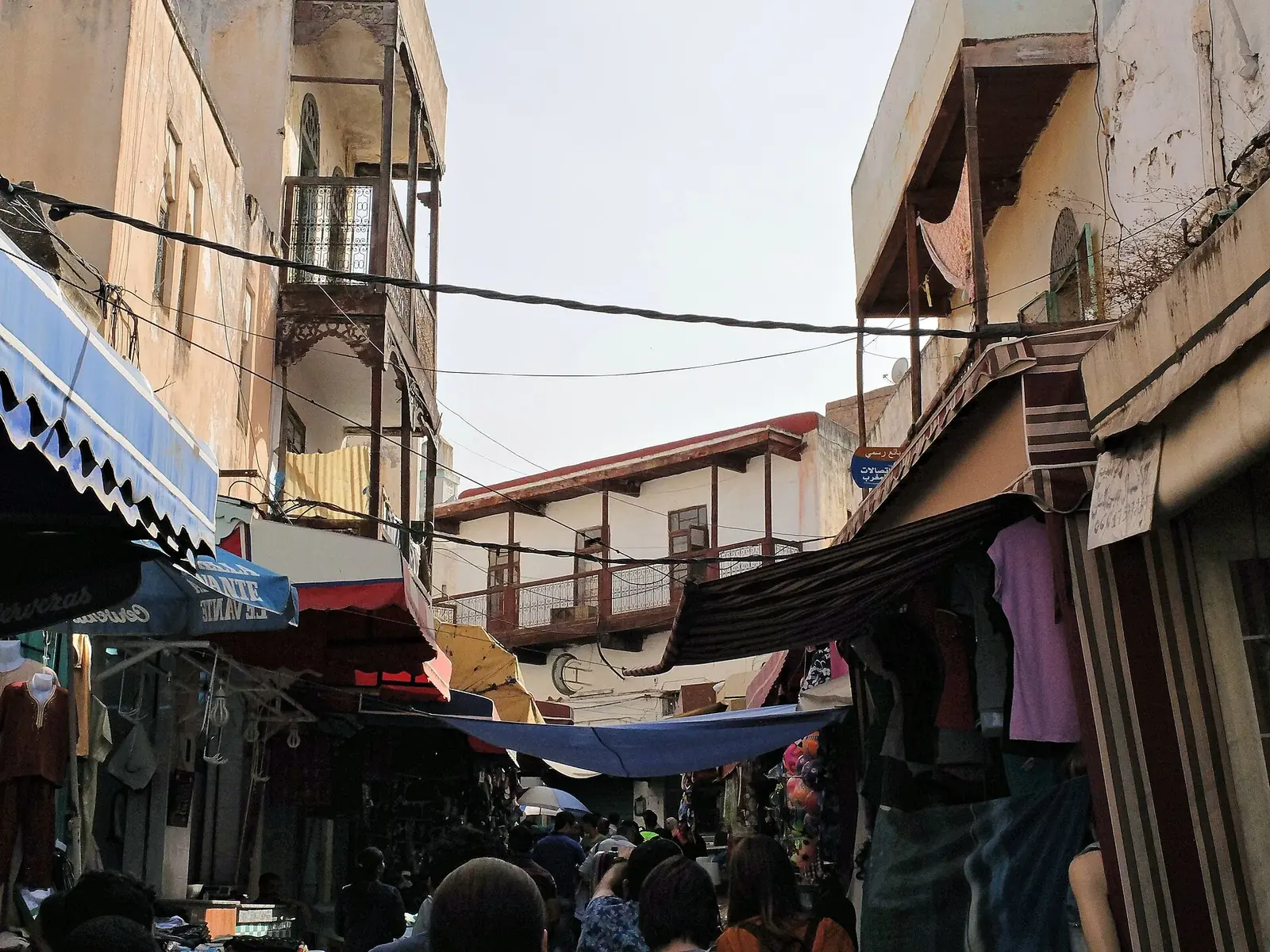
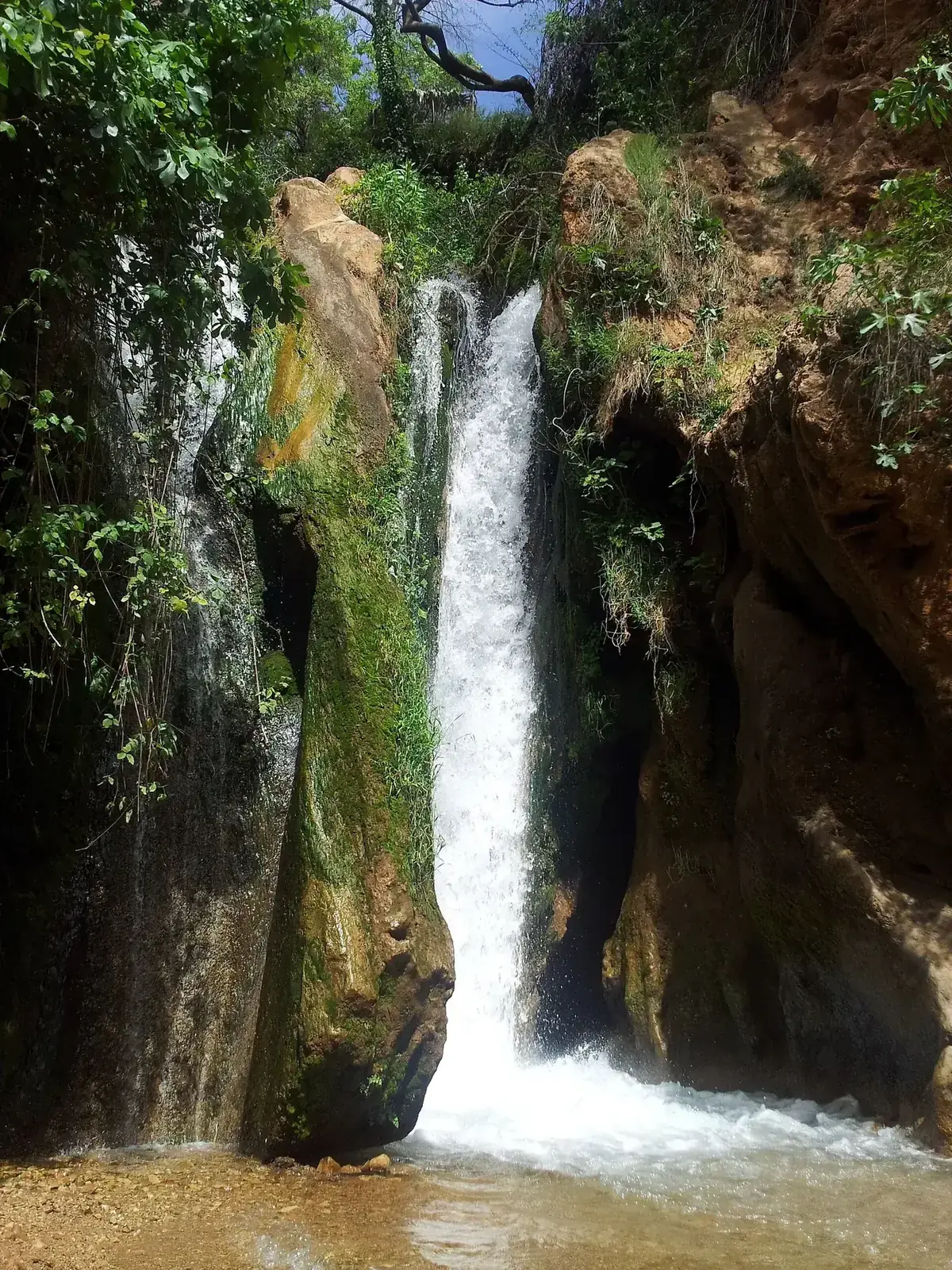
Sefrou developed around the Oued Aggai and orchard country at the foot of the Middle Atlas. A useful walking sequence is a historic gate, the compact medina, the former mellah, the river channel and then the cascade if water levels make it worthwhile. The waterfall is seasonal; it should be treated as an extra rather than the reason for the trip. Sefrou's Jewish heritage is significant, but synagogues and the cemetery may require local access arrangements.
In June, Sefrou's UNESCO-recognised Cherry Festival can transform the city with a parade, music, fantasia and the Cherry Queen tradition. Dates and traffic arrangements are announced year by year. Outside festival days, the reward is the opposite: ordinary market streets, artisans, bakeries and a medina with relatively little tourist staging.
A strong full-day order is Bhalil in the morning, a pre-arranged home or craft visit, lunch, then Sefrou's medina and river walk. Reversing the route also works if an access appointment or festival programme fixes your timing.
Ifrane, Azrou and the Cedar Forest: A Middle Atlas Day
The classic southbound route usually passes Imouzzer Kandar and Dayet Aoua before reaching Ifrane, then continues to Azrou and nearby cedar woodland. Do not turn every roadside stop into a checklist. Lake levels are seasonal, Ifrane is compact, and the forest is more rewarding when there is time to walk beyond the busiest parking area.
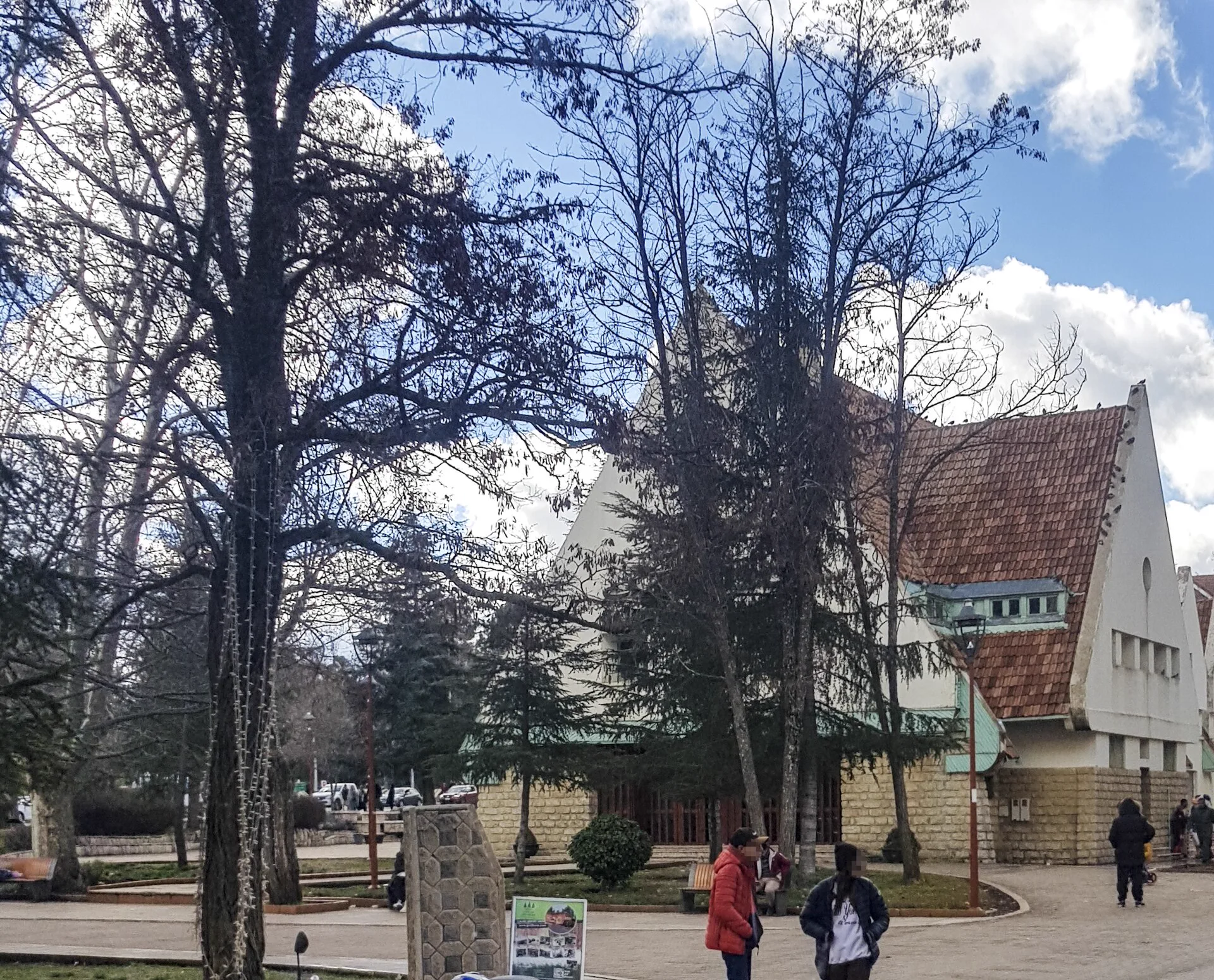
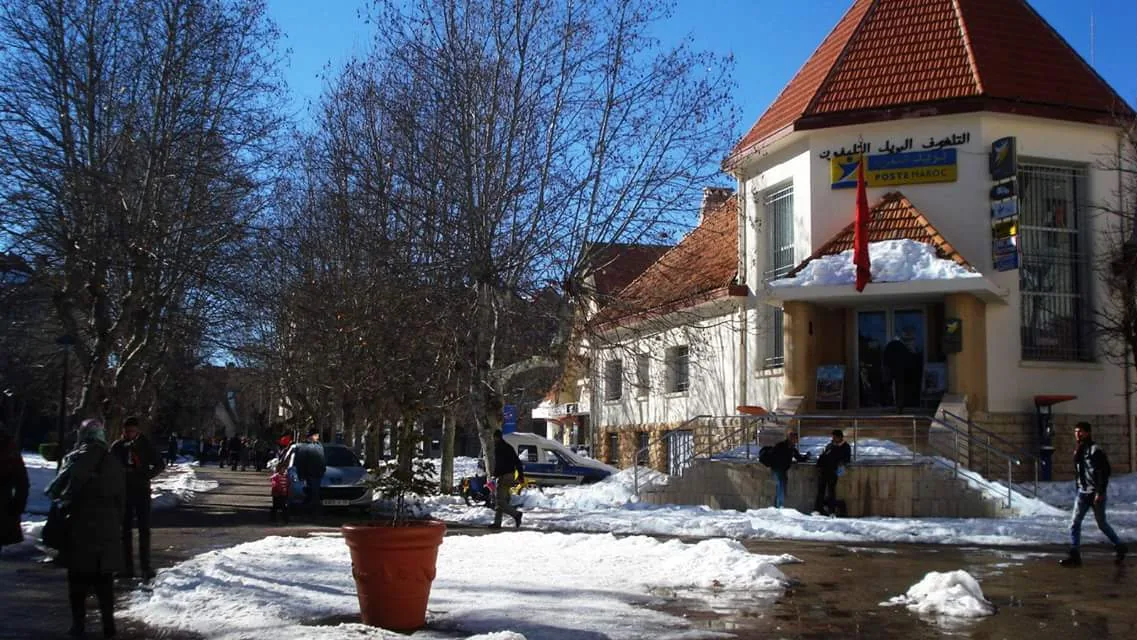
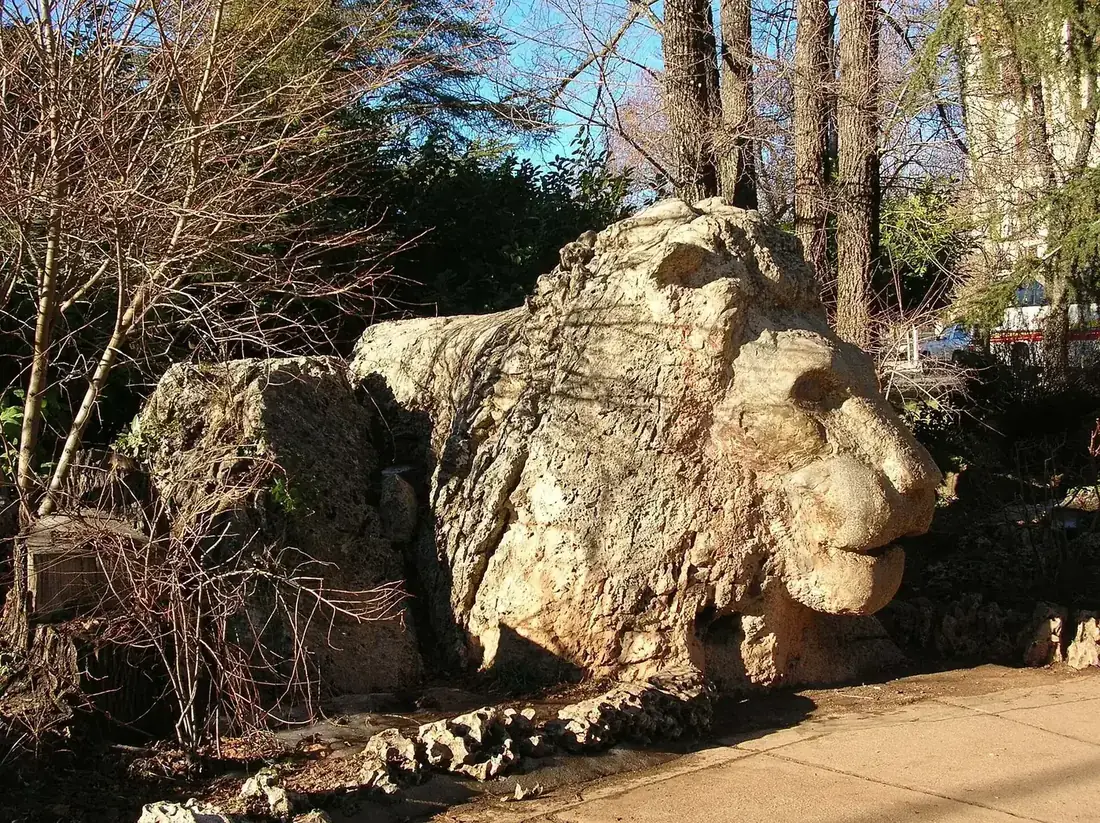
Ifrane sits at about 1,650 metres and was developed as a modern mountain town during the protectorate period. Its steep red roofs, gardens and broad streets feel deliberately unlike Fez. The Stone Lion, central park and a walk through the town centre are enough for most day visitors; snow can be substantial in winter, while summer temperatures are usually more comfortable than on the Saïs plain.
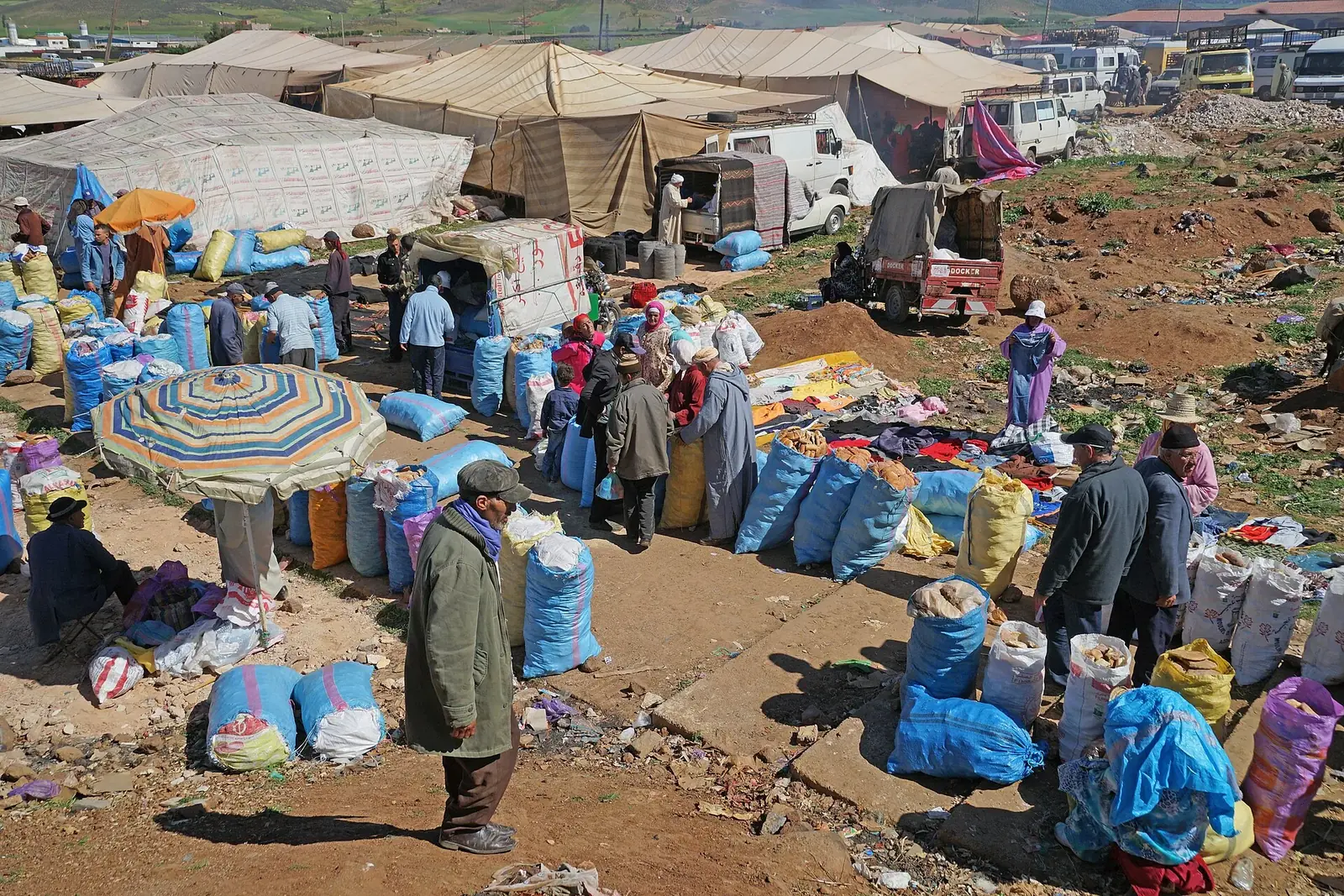
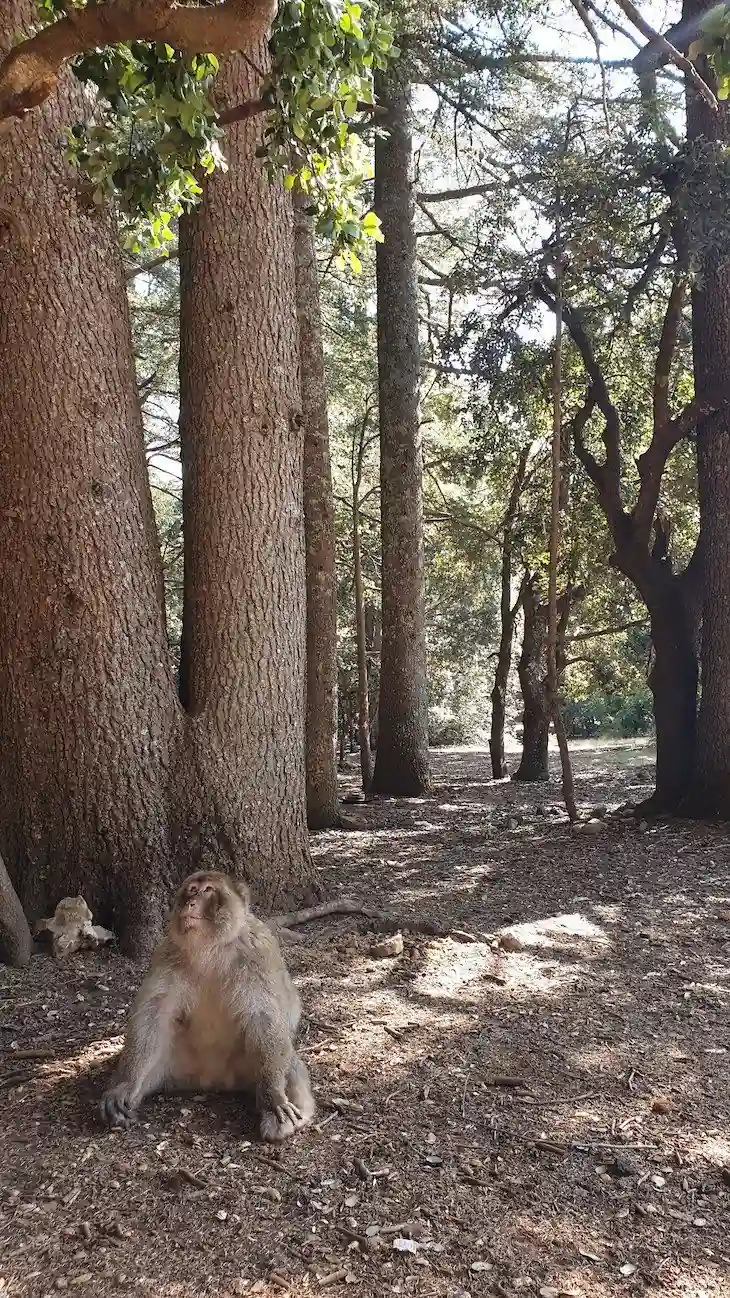
Azrou is an Amazigh market and craft town, not just a gateway to monkeys. Leave time for its centre or market atmosphere before the forest. Tripadvisor reviews repeatedly describe the principal macaque stop as commercial, crowded and littered, while visitors who walk farther report a quieter forest experience.
Barbary macaques are wild, endangered primates. Published research in Ifrane National Park found that tourist-provisioned animals consumed a large share of human-supplied food and experienced health effects. Never feed, touch, chase or pose closely with them. Keep food packed away, give them an escape route and accept that a responsible wildlife visit may produce no close-up photograph.

Volubilis: Roman and Pre-Roman Morocco in the Open Air
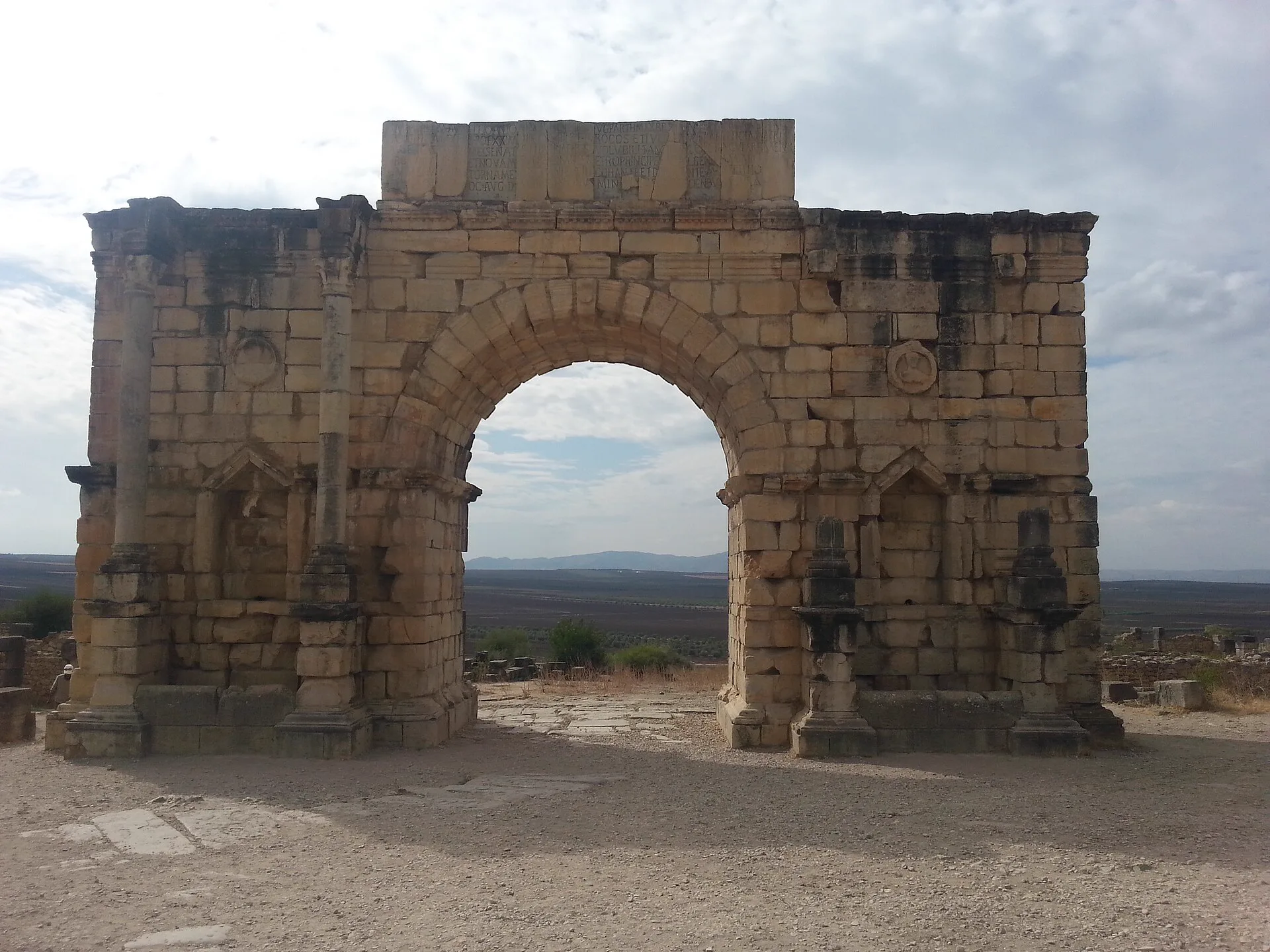
Volubilis is the archaeological centrepiece of the region. UNESCO describes a 42-hectare site whose history includes Mauritanian, Roman, Christian and Arabo-Islamic phases. Founded in the third century BCE, it became an important Roman frontier city and was later associated with Idris I before the Idrisid centre shifted nearby.
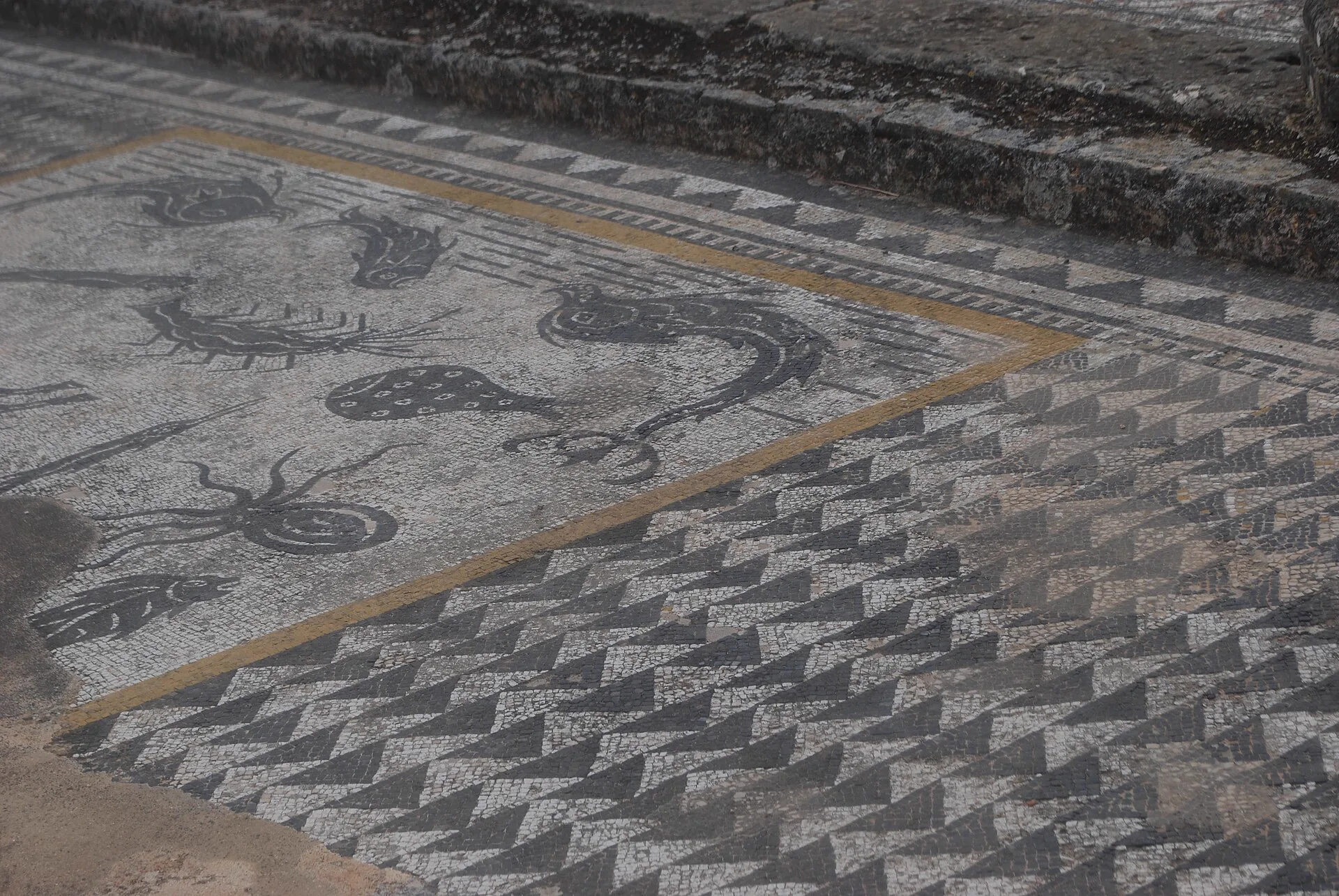
Allow about two hours if archaeology matters to you. A useful route links the Capitoline complex and basilica, Decumanus Maximus, Arch of Caracalla and mosaic houses. The House of Orpheus, House of the Labours of Hercules and House of Venus are names worth learning before arrival because the surviving floor mosaics are easier to understand with context.
Recent Tripadvisor reviews consistently identify the mosaics as the highlight and the lack of shade as the main practical problem. The site is broad, exposed and uneven. Carry water, sun protection and grippy shoes; start early in hot months. Interpretation and route signage may feel limited, so an authorised site guide or a prepared self-guided route adds real value.
This is not a smooth wheelchair circuit. Some principal areas can be viewed with assistance, but rough stone, steps and long distances limit access. Ask at the entrance about the most practical route before committing to the full circuit.

Moulay Idriss Zerhoun: Sacred Town Above the Plain
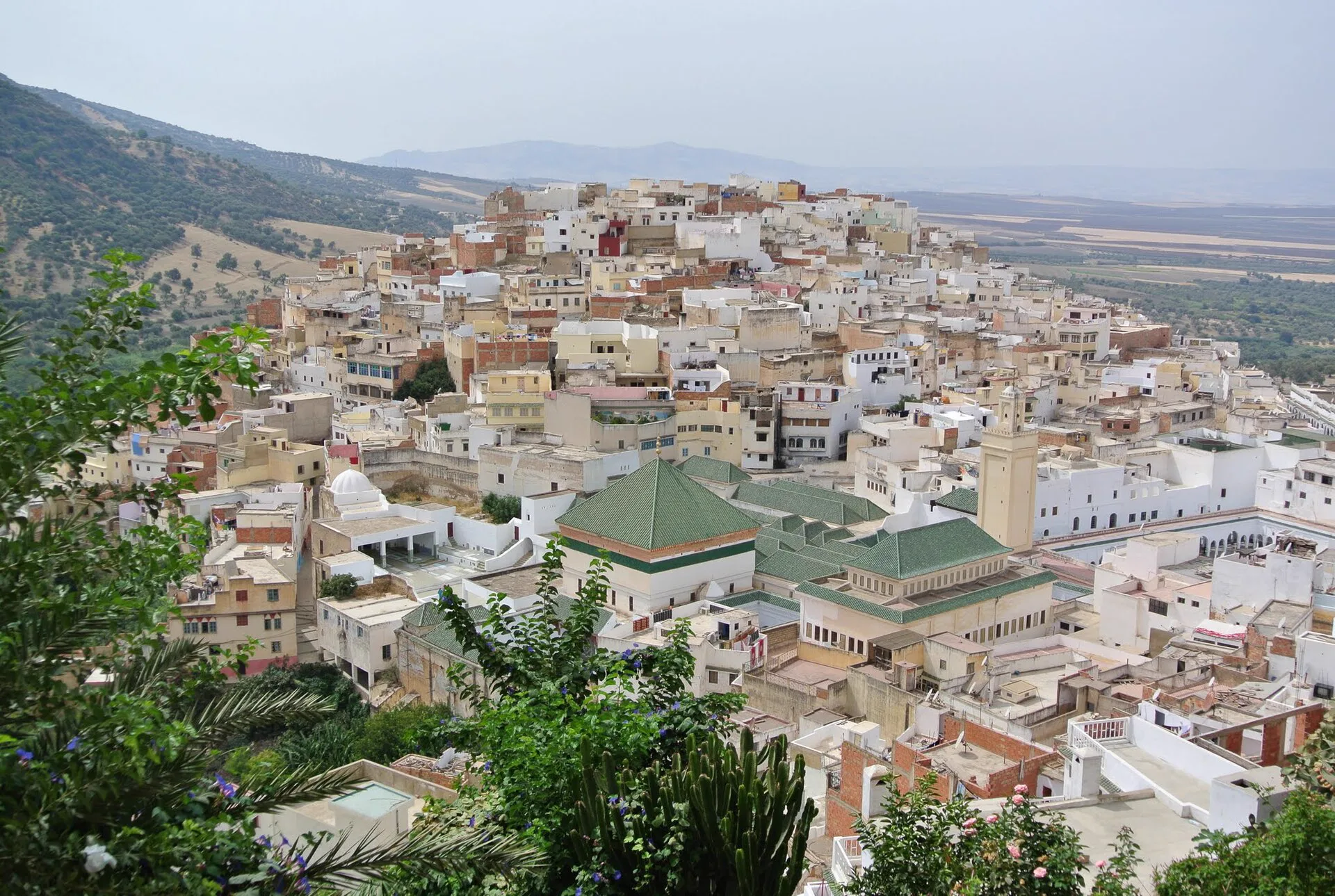
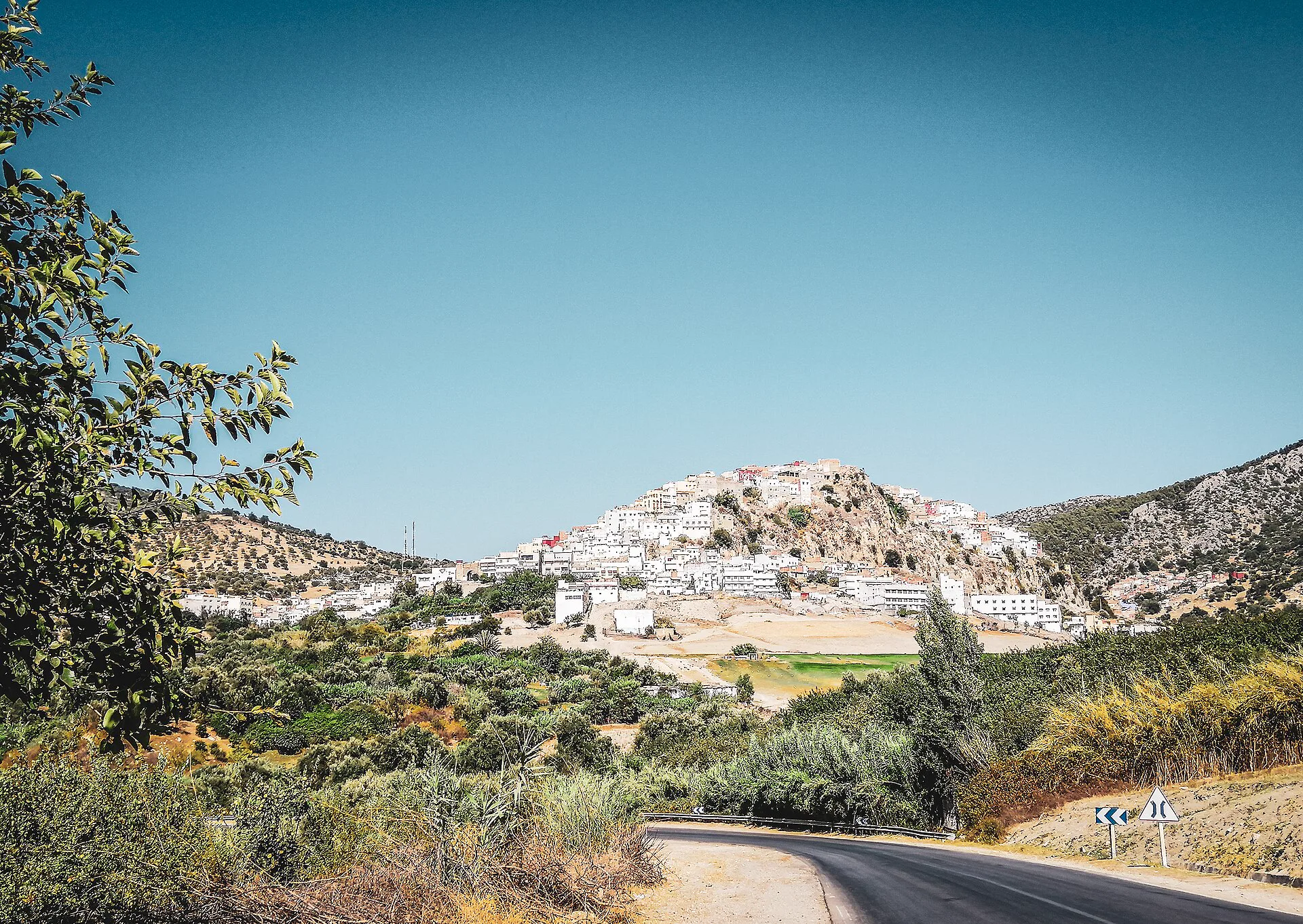
Moulay Idriss Zerhoun rises over two hills a short drive from Volubilis. The town developed around the tomb of Idris I, who established the Idrisid dynasty and is central to the early history of Islamic Morocco. It remains a place of pilgrimage and everyday religious life, not merely a scenic stop between two ticketed attractions.
Non-Muslim visitors can explore the town but should not expect to enter the sanctuary itself; a threshold marks the point where access stops. Dress and photograph respectfully around worshippers. The pleasure lies in the lanes, small main square, hillside viewpoints and the relationship between the town, olive country, Zerhoun ridge and Volubilis below.
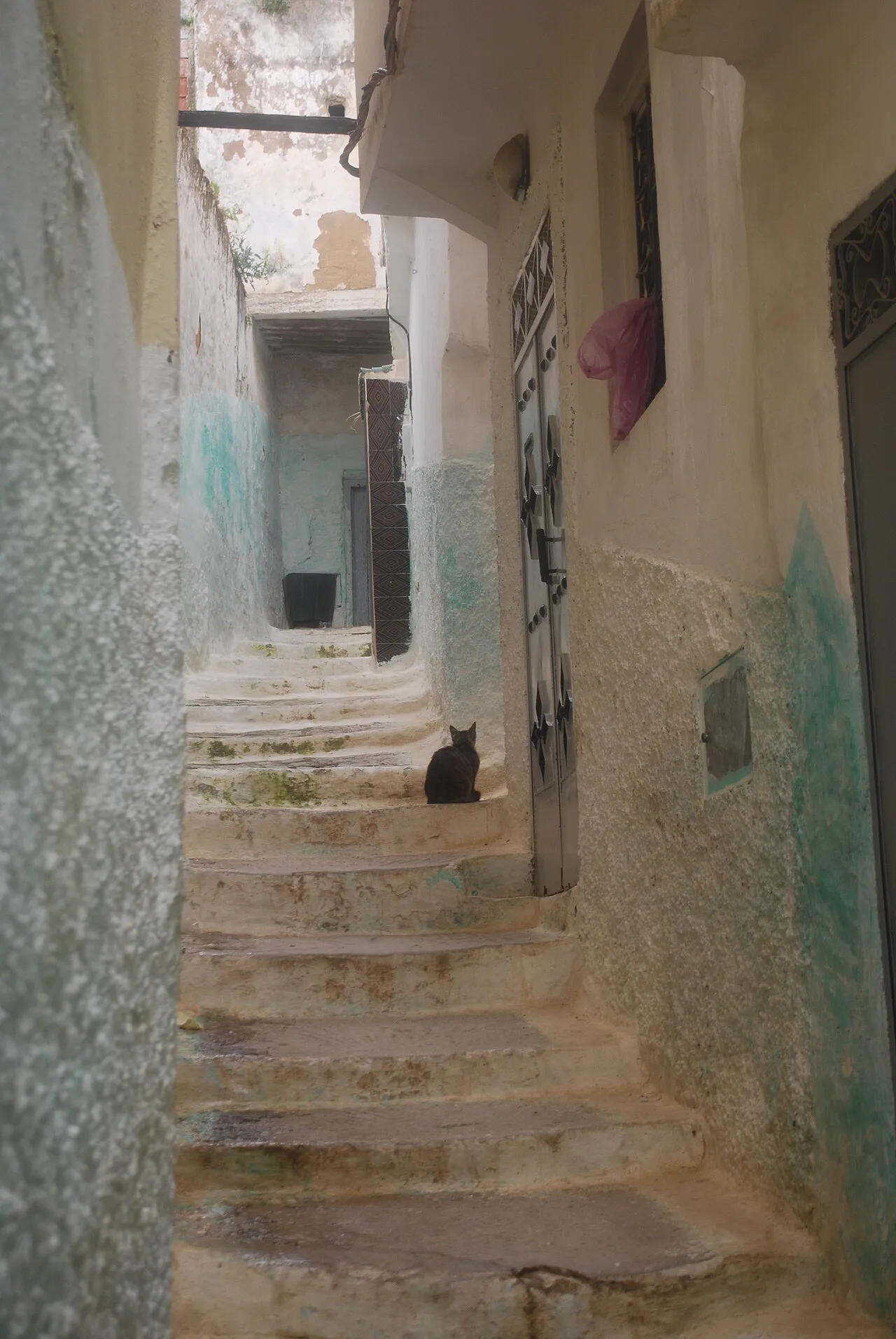
Tour itineraries often allow only a viewpoint photograph. Give the town 60–90 minutes if mobility permits. The climb to upper terraces is steep and sometimes confusing, so a local walking guide can add more here than a driver who simply waits below. Lunch on a terrace can turn a rushed transit stop into the human centre of the westbound day.
Meknes: Give the Imperial City Enough Time
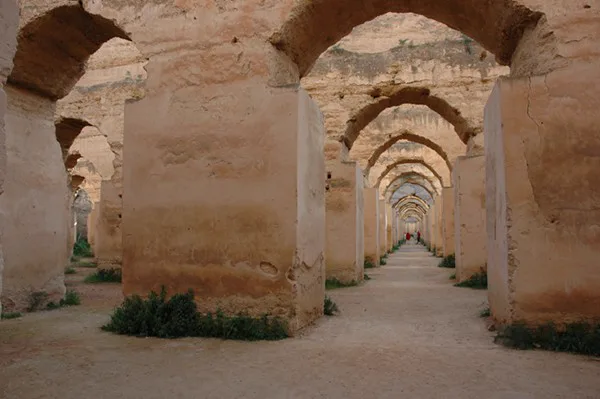
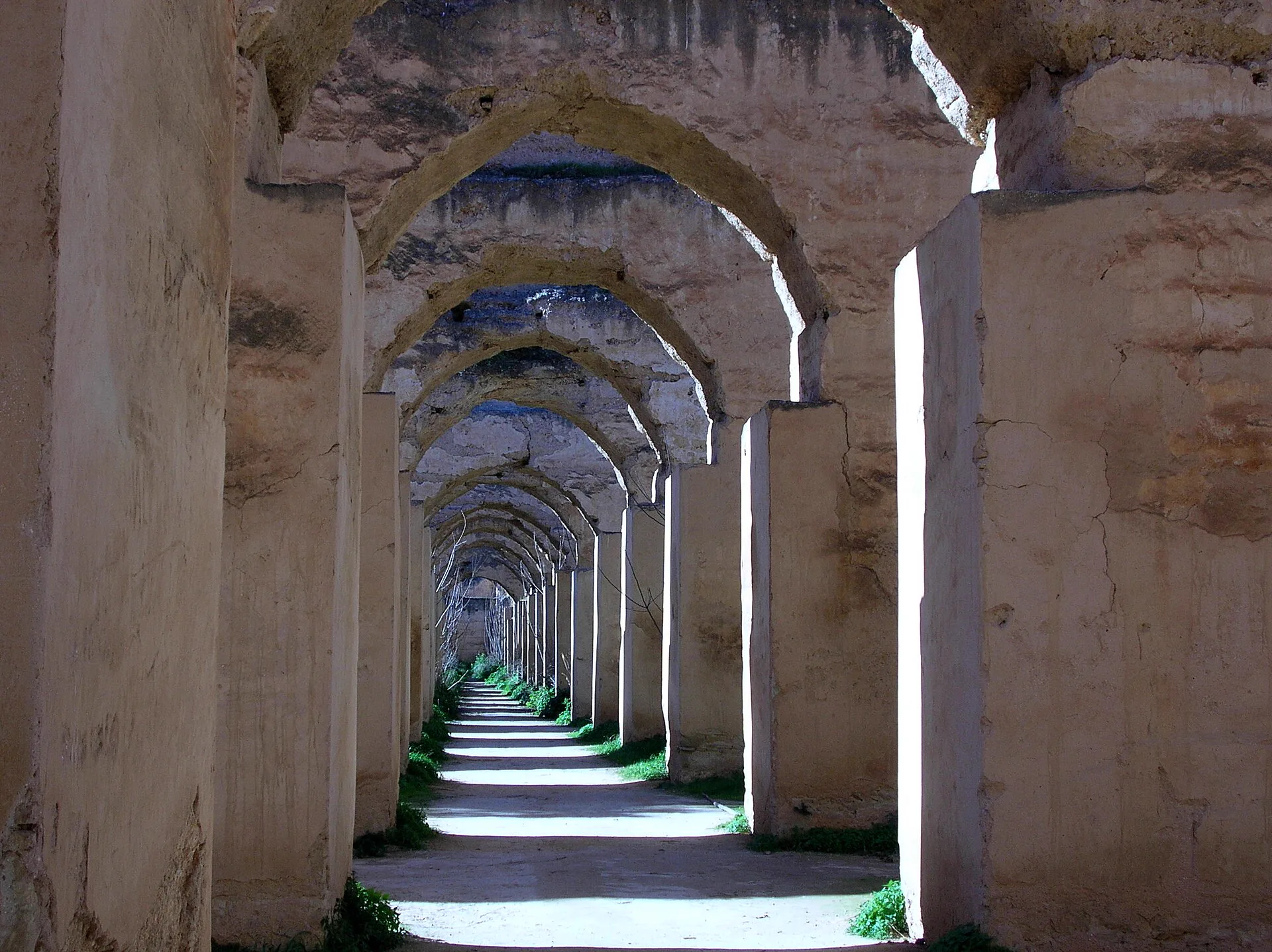
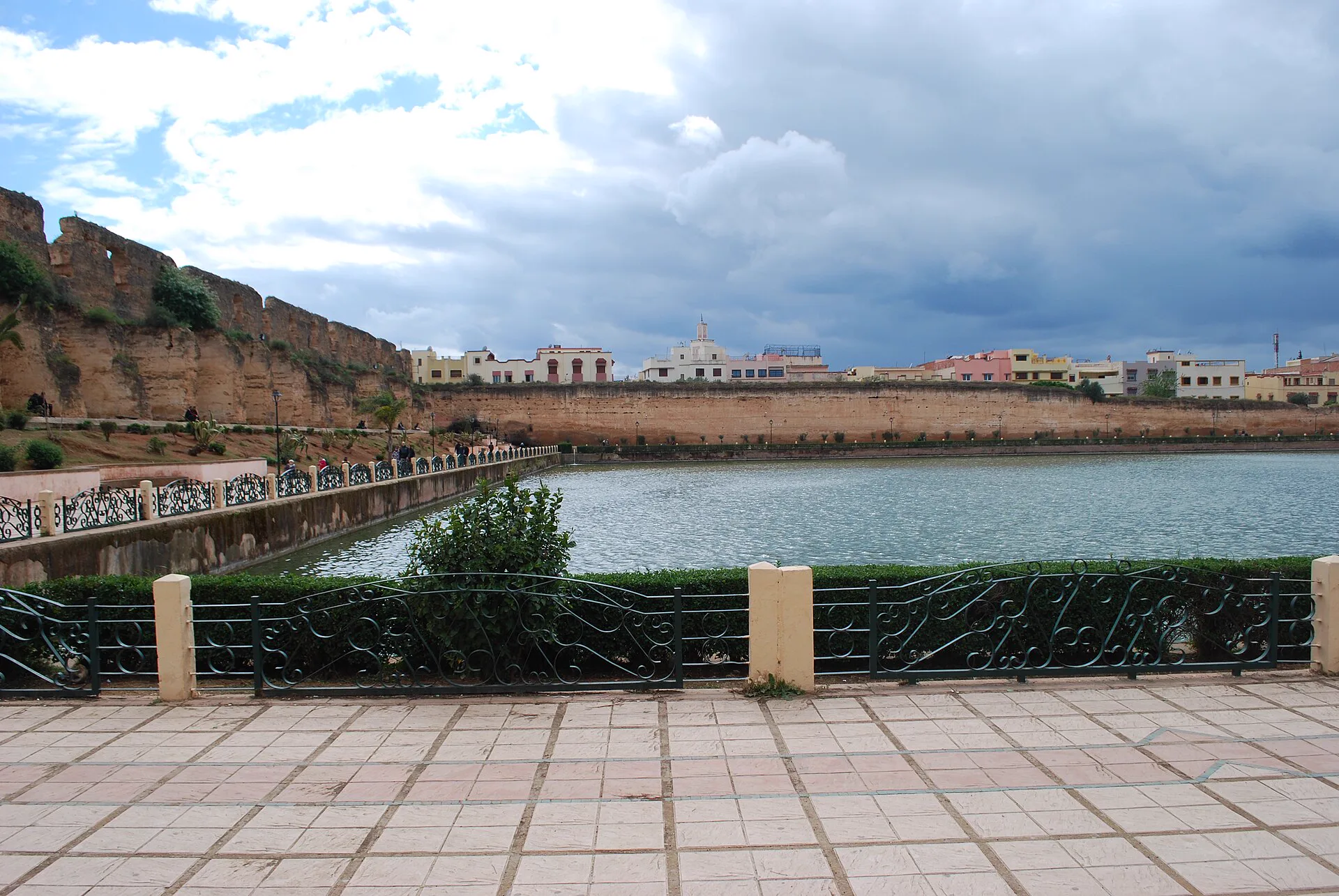
UNESCO's Historic City of Meknes combines an older medina with the immense imperial project of Sultan Moulay Ismaïl, who made Meknes his capital from 1672 to 1727. Monumental gates, walls, granaries, waterworks and palace precincts express a seventeenth-century capital planned on a scale that is difficult to appreciate during a one-hour tour stop.
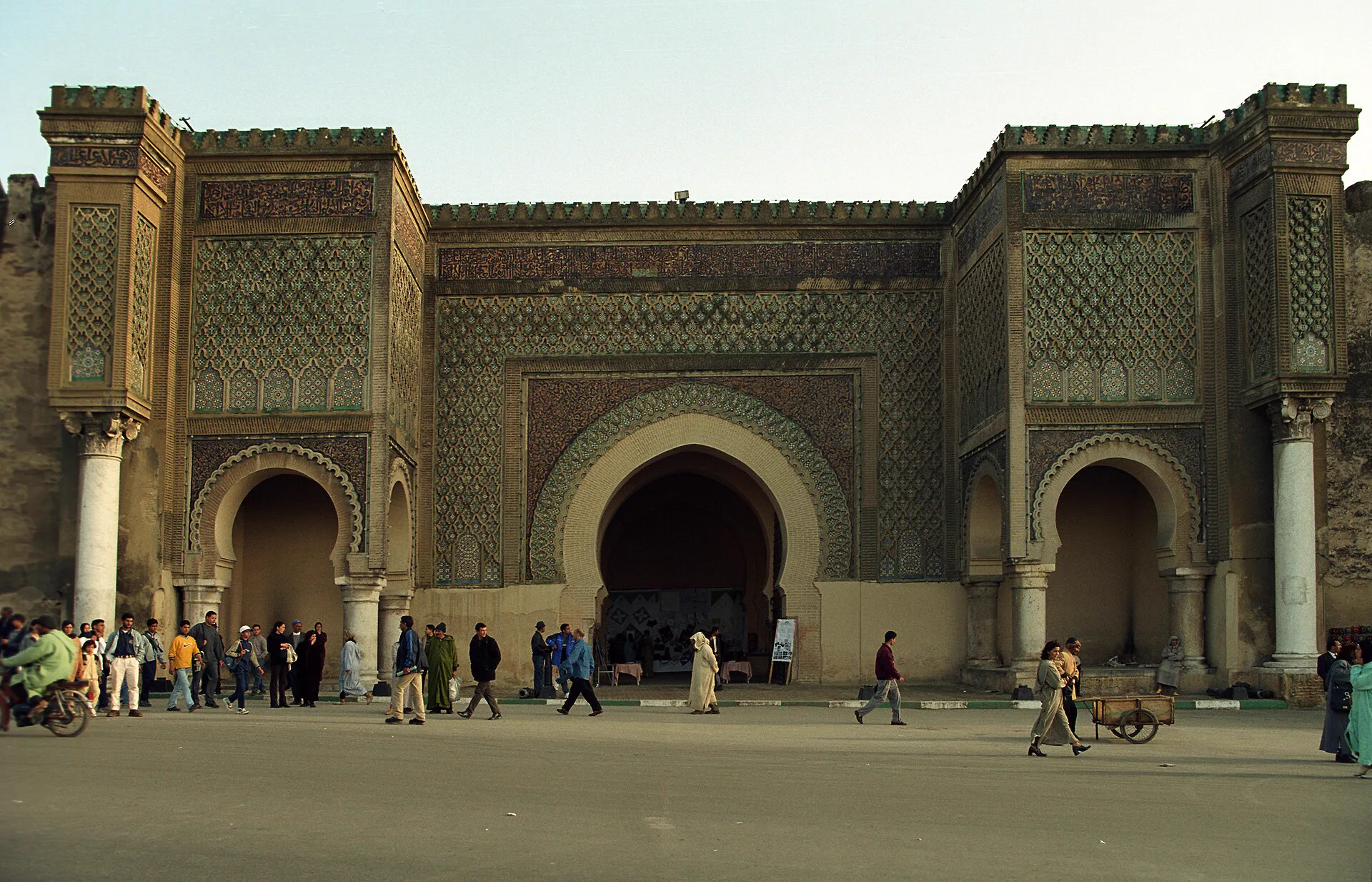
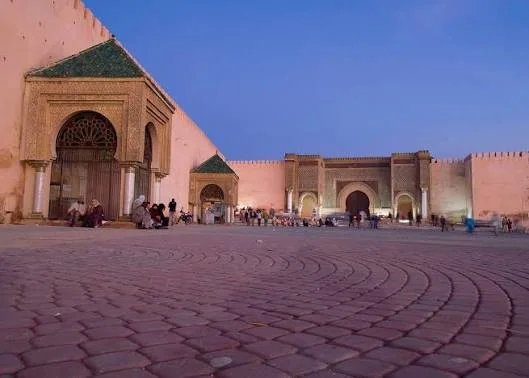
Begin around Place El Hedim and Bab Mansour, then choose according to access and interest: Dar Jamaï museum, the medina and Bou Inania Madrasa; or the imperial-city monuments around the Mausoleum of Moulay Ismaïl, Sahrij es-Souani and the Heri es-Souani granary and stable complex. Do not assume every interior is open. Meknes has undergone extended restoration, and individual monuments can close, reopen or change hours.
Travellers often praise Bab Mansour and the scale of the granaries but report sparse signs and confusing closures. Sahrij es-Souani officially reopened in April 2025 after more than five years, yet same-day confirmation remains sensible for nearby interiors. A local guide is most useful for interpreting the imperial precinct and adapting the route around current access.
Meknes works better as its own day trip than as the exhausted final hour after Volubilis. It is also the easiest major outing without a car because Fez and Meknes are linked by regular trains. Check the current ONCF schedule, note which Meknes station serves your planned route best, and allow taxi time between the station and the historic city.
How to Combine Volubilis, Moulay Idriss and Meknes
The famous three-stop circuit is possible, but the quality depends on discipline. Leave Fez early, visit exposed Volubilis before midday heat, continue to Moulay Idriss for a walk and lunch, then use the remaining afternoon for a deliberately short Meknes route. A driver solves transport between sites but is not automatically an archaeological or city guide; ask what guiding is actually included.
If you read slowly, travel with children, need an accessible pace or care about museums, choose only two stops. Volubilis plus Moulay Idriss creates a coherent archaeology-and-origins day. Meknes plus Volubilis pairs two UNESCO sites but leaves less local-town time. Meknes alone provides the best architecture and medina depth.
- Comfortable archaeology day: Fez → Volubilis → Moulay Idriss → Fez
- Two-UNESCO day: Fez → Volubilis → selected Meknes highlights → Fez
- Very full classic circuit: Fez → Volubilis → Moulay Idriss → Meknes → Fez
- Slow imperial day without a car: Fez train → Meknes medina and imperial precinct → Fez train
Moulay Yacoub: A Thermal-Spa Half-Day
Moulay Yacoub is a spa town north-west of Fez known for naturally hot sulphurous water. Morocco's tourism office describes water emerging at about 54°C from considerable depth. That does not make this a substitute for medical care, and travellers with cardiovascular, respiratory, pregnancy or heat-sensitivity concerns should seek medical advice before prolonged thermal bathing.
Decide which experience you want before leaving Fez: a modern managed spa with bookable treatments, or a more basic local bathing experience. Facilities, dress rules, gender arrangements and treatment availability differ. Confirm directly, reserve in advance and bring swimwear, sandals and water rather than relying on old blog posts.
Recent Tripadvisor feedback is mixed: some guests value the thermal experience and staff, while others report waiting, organisation and hygiene concerns. That makes Moulay Yacoub a specialist outing, not a universal must-see. Go because you want the spa, not because a tour list needs another destination.
Chefchaouen from Fez: Possible, but Better Overnight
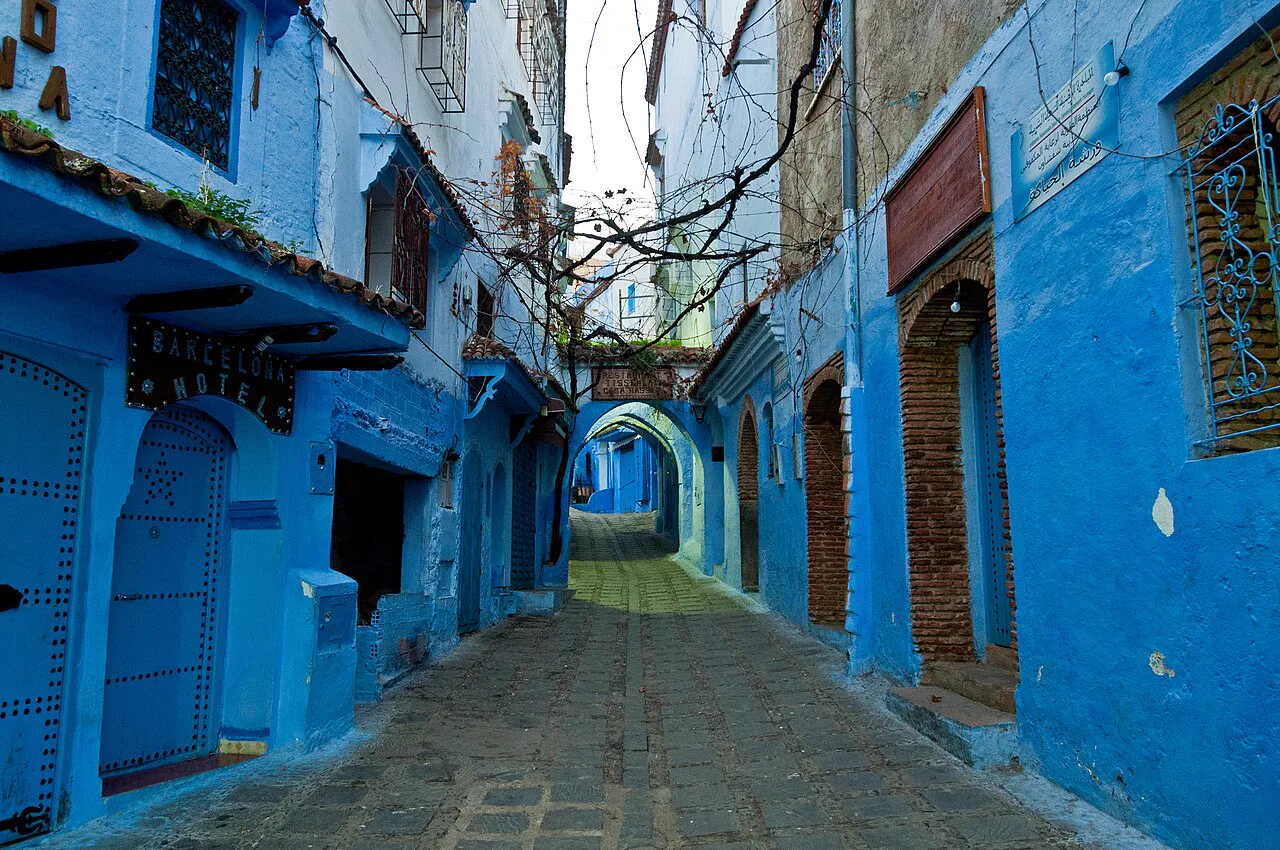
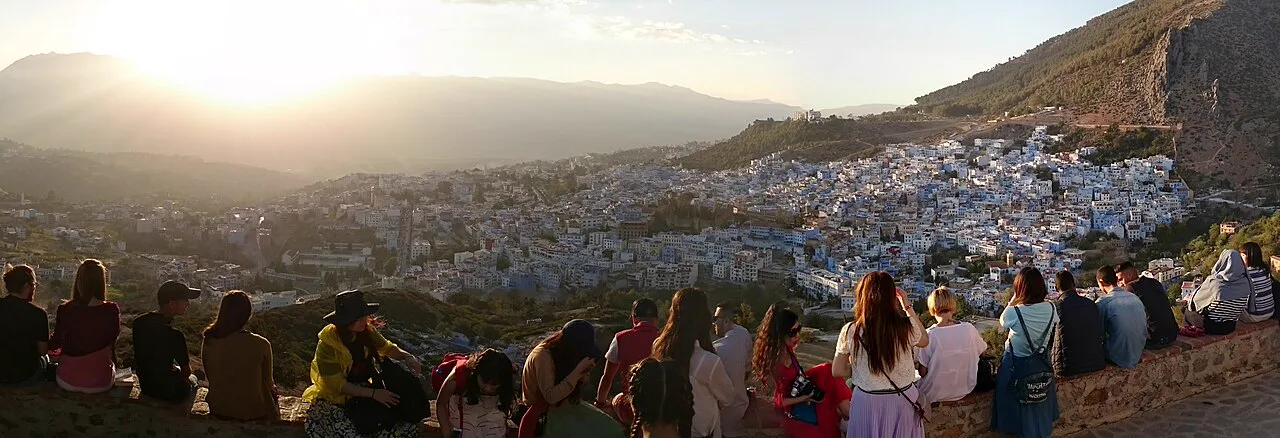
Chefchaouen is one of Morocco's most photogenic towns, but it is not close to Fez. The road through the Rif commonly takes 3.5–4 hours each way, so a day tour can mean seven or eight hours in a vehicle for only a few hours in town. Tripadvisor reviews often say the long drive is manageable with a good driver, yet the travel-to-visit ratio remains poor.
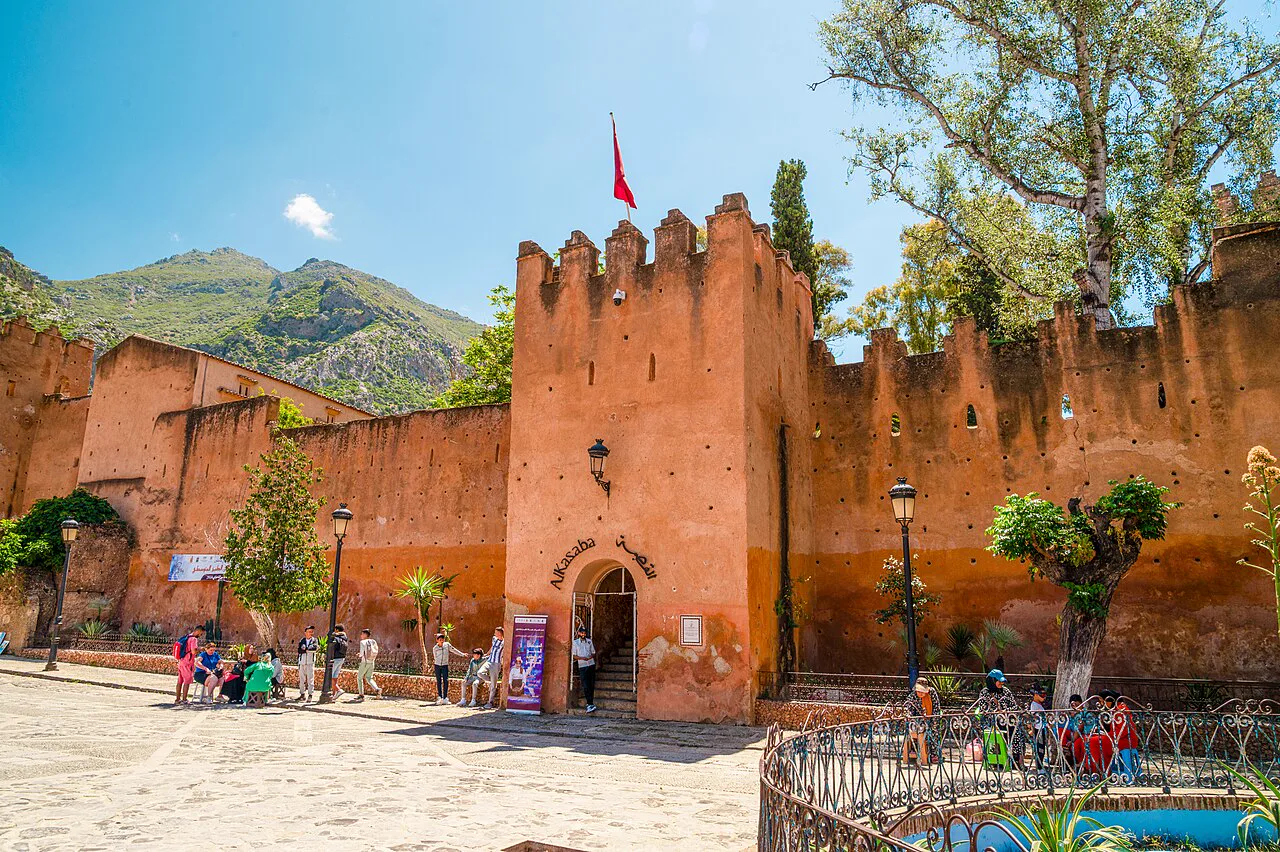
If a day trip is your only option, leave very early and focus on the medina, Place Outa el Hammam, kasbah area, Ras el-Maa and one elevated view. Do not add Akchour: its road transfer and hike deserve a separate day. Mountain weather, road works or flooding can also disrupt the route, so avoid tying an onward flight or train to the same evening.
An overnight gives you quieter early and late light, time for the kasbah and viewpoints, and a safer margin around road conditions. If your Morocco route already passes Tangier or Tetouan, place Chefchaouen between those cities and Fez instead of backtracking in one day.
Transport: Train, Driver, Tour, Rental Car or Grand Taxi
Use the train for Meknes: it avoids city-to-city road traffic and lets you build an independent day. Use a private driver for Volubilis, Moulay Idriss or a customised Middle Atlas loop, where several separated stops make public transport inefficient. A shared tour can reduce cost, but clarify stop lengths, group size, monument entry, guiding and lunch before booking.
A rental car offers the most freedom but creates parking, navigation and insurance responsibilities. Do not drive inside medinas, avoid night driving on unfamiliar mountain roads and never leave luggage visible. Grand taxis can work for direct local journeys such as Sefrou, but a chain of rural stops requires negotiation, waiting and often a return arrangement; confirm whether the quoted amount is per seat or for the whole vehicle.
A driver is not necessarily a licensed guide. For Volubilis, an authorised site guide provides archaeology. In Meknes or Moulay Idriss, a local walking guide adds access and context. Ask for the vehicle type, seatbelts, air conditioning, start and return times, cancellation terms and exactly which guiding services are included.
- Confirm the next day's pickup point outside the pedestrian medina; vehicles cannot reach most riad doors
- Check current ONCF schedules directly for train travel rather than copying times from blogs
- For shared tours, ask how long is allocated to each major stop—not only the total tour duration
- Carry cash in small denominations for local taxis, cafés, tips and small entrances
- Download offline maps, but do not rely on map pins for private homes, sanctuary access or seasonal forest tracks
- Never accept a rushed or unsafe driving style simply to preserve an overfilled itinerary
Season, Weather and What to Pack
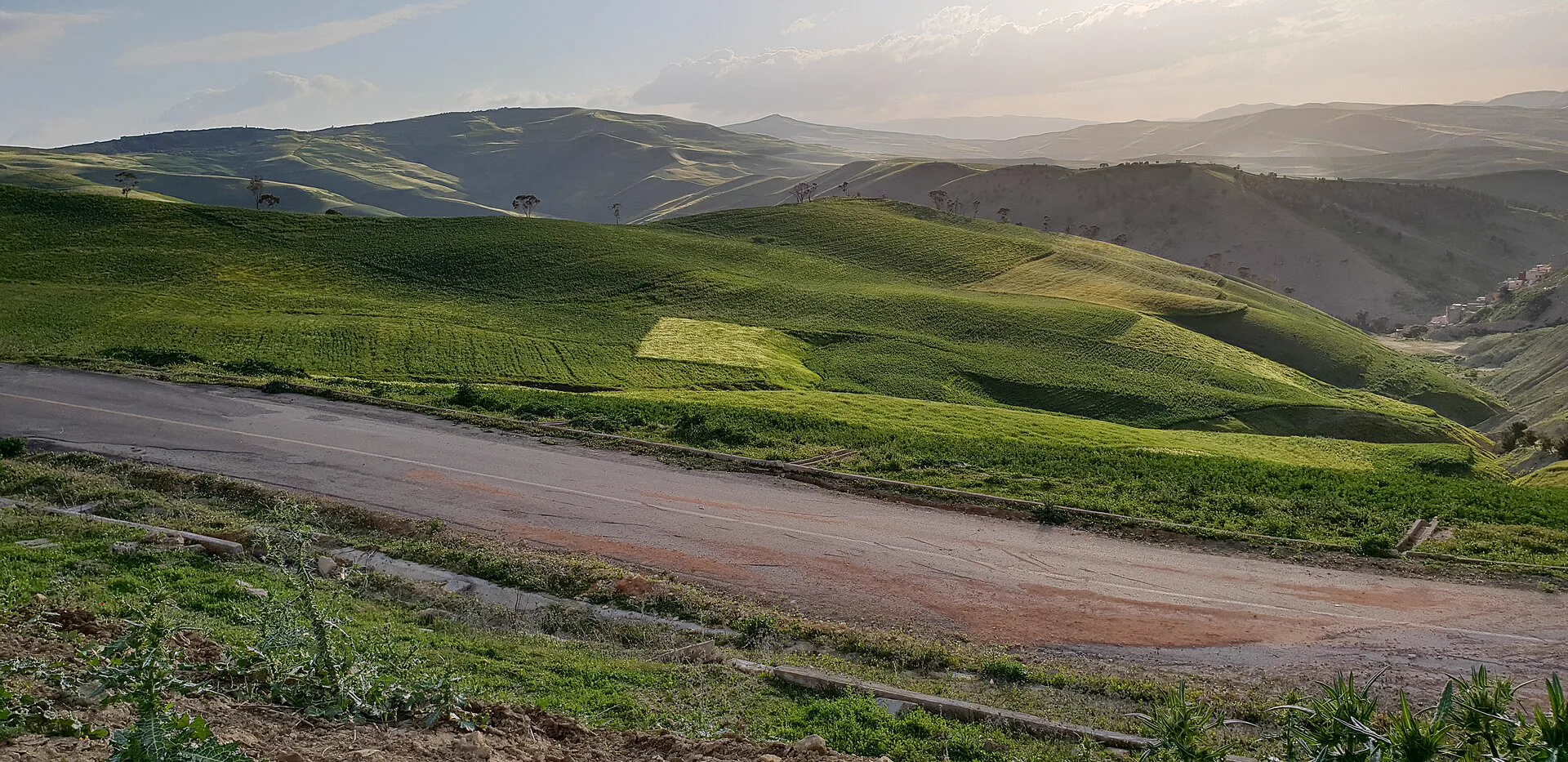
Spring brings green hills, flowers and comfortable archaeological weather, though rain can affect paths. Summer makes Volubilis and Meknes hot and exposed; begin early and shift indoor or shaded stops toward midday. Autumn is often excellent for walking. Winter can bring rain on the plain and genuine snow, ice or road disruption around Ifrane and Azrou.
The Sefrou cascade, Dayet Aoua and other natural stops change with rainfall and water levels. Snow activities around Ifrane also depend on current conditions. Treat these as seasonal possibilities, not guaranteed attractions, and ask locally the day before.
- Volubilis: hat, high-protection sunscreen, water and shoes suitable for rough stone
- Middle Atlas: an extra layer year-round; warm waterproof footwear in winter
- Bhalil and medinas: grippy walking shoes and a small bag that leaves hands free on stairs
- Moulay Yacoub: confirmed swimwear requirements, sandals, water and any personally required toiletries
- All routes: charged phone, offline map, tissues, hand sanitiser and modest clothing for sacred places
Accessibility, Families and Responsible Visits
No single accessibility label fits these routes. Bhalil and Moulay Idriss are steep; old medinas have uneven lanes; Volubilis is broad and rough; and forest stops may have roots, mud or informal paths. Meknes by vehicle and selected central Ifrane stops are easier to adapt. Ask providers for a specific step-free route rather than accepting a generic claim that a tour is accessible.
With children, choose fewer stops, carry snacks that remain packed around macaques and build in toilets and free walking time. At private homes, workshops, cemeteries and sanctuaries, ask before photographing people or interiors. Buy directly from makers when you genuinely want the work; do not treat hospitality as a free photo opportunity.
- Do not feed or touch Barbary macaques, even if vendors or other visitors encourage it
- Do not enter a cave home, workshop, orchard or religious building without clear permission
- Keep drones grounded unless all aviation, heritage-site, privacy and local permissions are confirmed
- Carry out litter from forests and viewpoints and avoid single-use food packaging where possible
- Respect non-Muslim access limits at sanctuaries and avoid blocking worshippers for photographs
What Tripadvisor Reviews Add to the Planning
Tripadvisor is most useful here as a collection of recurring practical observations, not as an authority on history. Across recent reviews, Volubilis visitors repeatedly praise the mosaics but warn about sun, uneven terrain and limited interpretation. Meknes reviews value Bab Mansour and Heri es-Souani yet often mention restoration, closures and sparse signage. Middle Atlas reviews divide between crowded roadside macaque encounters and quieter walks farther into the forest.
Tour-product reviews also reveal itinerary pressure. Some travellers enjoy the classic Volubilis–Moulay Idriss–Meknes circuit, while others describe very short viewpoint stops or a final city visit after fatigue. Chefchaouen reviews consistently acknowledge the long drive even when they praise the destination. These patterns are why this guide recommends fewer stops, direct access checks and enough time outside the vehicle.
Exact ratings, rankings, prices and opening hours were not copied. They are volatile, can reflect very small samples and may mix reviews of a place with reviews of a particular tour operator. Use recent detailed reviews to formulate questions, then confirm operational facts with the site, transport company or provider.
Three Strong Itinerary Plans
- One free day—local and slow: morning Bhalil walk and arranged cave-home or craft visit; lunch; Sefrou gate, medina, mellah and river; return before evening
- One free day—archaeology: early Fez departure; two-hour Volubilis circuit; Moulay Idriss walk and terrace lunch; return directly or add only preselected Meknes highlights
- One free day—mountains: Imouzzer or Dayet Aoua only if conditions are worthwhile; Ifrane walk; Azrou lunch or market atmosphere; cedar-forest walk without feeding wildlife
- Two free days—best historical depth: Volubilis and Moulay Idriss on day one; Meknes independently by train on day two
- Three free days—balanced region: Bhalil and Sefrou; Ifrane and Azrou; Volubilis and Moulay Idriss, with Meknes added only if energy and time remain
Frequently Asked Questions
How many days do I need in Fez before taking a day trip?
Allow at least two full days in Fez: one for Fez el-Bali's madrasas, markets, crafts and tanneries, and one for Fez el-Jdid, the Mellah, Jewish heritage, Jnan Sbil and a viewpoint. Add a third day for a cooking or craft workshop before choosing an excursion.
What are the must-see places inside Fez?
Prioritise Bab Bou Jeloud, Bou Inania or Al-Attarine Madrasa, the Qarawiyyin quarter, Nejjarine Museum, Place Seffarine and one respectful tannery view. With a second day, add the Royal Palace exterior, Mellah, Ibn Danan Synagogue if open, Jnan Sbil and the Marinid Tombs viewpoint.
Do I need a guide inside Fez medina?
Independent walking is possible, but a licensed guide is valuable for a first history-focused half-day because map navigation is unreliable and many important details are unlabelled. Agree on duration, price and whether shopping stops are excluded before starting.
What is the best day trip from Fez?
For archaeology, choose Volubilis and Moulay Idriss. For a close, less-touristed cultural day, choose Bhalil and Sefrou. For scenery and cooler weather, choose Ifrane, Azrou and the cedar forest. Meknes is the easiest major trip to organise independently by train.
Can Volubilis, Moulay Idriss and Meknes be visited in one day?
Yes, with an early start and a driver, but it is a 10–12-hour day and each stop must be limited. Visitors who care about archaeology, museums, photography or a relaxed lunch should choose two stops or give Meknes a separate train day.
How long should I spend at Volubilis?
Allow about two hours for the principal monuments and mosaics, longer if you use a guide or study archaeology. There is little shade and the ground is uneven, so start early in hot weather.
Can I visit Meknes from Fez by train?
Yes. Regular rail service makes Meknes the simplest major independent day trip. Check the current ONCF timetable and station, then use a local taxi between the station and the historic centre.
Can you see Barbary macaques near Fez?
Barbary macaques live in cedar and oak forest around Azrou and Ifrane National Park, but sightings are not guaranteed. Never feed, touch or approach them for a photograph; tourist feeding is harmful to their health and behaviour.
Is Chefchaouen a good day trip from Fez?
It is possible, but the 3.5–4-hour drive each way makes it a very long day with limited town time. An overnight is much better, especially if you want early light, viewpoints or any hiking.
Do I need a guide for day trips from Fez?
Not for Ifrane or an independent Meknes train day. A local guide adds substantial value at Volubilis and can help with context and respectful access in Bhalil, Sefrou, Moulay Idriss and Meknes. Remember that a driver is not automatically a licensed guide.
Are day trips from Fez accessible for travellers with limited mobility?
Some can be adapted, but Bhalil and Moulay Idriss are steep, Volubilis is rough and spread out, and medinas have uneven paving. Ask for a specific step-free route and vehicle plan; central Ifrane and selected Meknes sights are generally easier to adapt.
What should I book in advance?
Arrange private-home visits in Bhalil, specialised heritage access in Sefrou, a reputable driver for multi-stop rural routes and any treatment at Moulay Yacoub. Confirm monument openings and seasonal road or weather conditions shortly before travel.
Where is the best quiet base outside Fez?
Bhalil is useful for travellers who want village evenings and easy access to Sefrou and the Middle Atlas. Dar Zaytoun offers a calm garden base there, while Fez remains more convenient for trains and very early westbound departures.